13 Best Marketing Attribution Software Tools (2026, Re-Verified)

Founder, Grow Predictably · 15+ yrs building B2B revenue systems
TL;DR: This review re-verifies current 2026 pricing on 8 of the 13 marketing attribution tools compared here, catching real changes at seven of them (HubSpot, DreamData, ActiveCampaign, Hyros, Wicked Reports, Segmetrics, and Ruler Analytics) and confirming Windsor.ai unchanged. There is no single best pick. The honest answer depends on your business model and your data stack. Judge each tool on whether it would change a real budget decision, not on how many channels it tracks.
Key Takeaways
- Thirty-three percent of marketing leaders cite measuring ROI as their single biggest challenge in 2026, according to HubSpot’s own State of Marketing Report of 1,500-plus marketers. Most attribution software does not close that gap.
- Google quietly made data-driven attribution the new default across Google Ads and GA4 back in 2023, demoting last-click and retiring four rule-based models (first-click, linear, time-decay, position-based) that most reviews still describe as current options.
- Pricing has moved at several of the most commonly compared tools. HubSpot shifted to per-seat pricing, DreamData collapsed to a free tier plus custom quotes only, and ActiveCampaign added a new entry tier below its old Plus plan.
- There is no single best marketing attribution tool. The right pick depends on your business model, your sales cycle, and whether your buying process has touchpoints Google Analytics cannot see.
- The honest first step is naming the one budget decision the tool needs to change, before a single vendor demo.
I re-verified pricing directly against each vendor’s current pricing page for seven of the 13 tools in this comparison, plus Hyros, which I sourced from a third-party pricing tracker since Hyros publishes no public pricing page of its own. Several had genuinely changed since this page was last updated.
When I audit a marketing team’s tool stack, stale pricing in a comparison article is one of the first things that erodes trust in the rest of it.
This is for the CMO, VP of Marketing, or fractional CMO deciding whether dedicated attribution software earns its subscription over free tools. Name the budget decision the tool needs to change. Then judge each option against that, not a feature list.
Why does most marketing attribution software fail to change a single budget decision?
Most marketing attribution software fails for one reason: it gets judged on how many channels it tracks, not on whether its output ever changes a real spend decision. A team buys the tool, the dashboard fills with charts, and next quarter’s budget gets allocated exactly the way it always has.
You can spot the pattern inside the first review cycle. A dashboard shows twelve channels contributing to revenue in some fraction, but nobody on the team can say which specific number would need to shift before a real dollar moved from one channel to another. The software ends up answering the wrong question entirely.
- What it answers: which channel touched the deal
- What actually matters: which channel should get more budget next quarter
That gap shows up in the numbers too. According to HubSpot’s own 2026 State of Marketing Report, which surveyed more than 1,500 marketers globally, thirty-three percent of marketing leaders cite measuring ROI as their single biggest challenge. That gap persists even as adoption of attribution software climbs.
More dashboards haven’t solved the ROI question for a third of marketing leaders.
Avinash Kaushik, bestselling author of Web Analytics 2.0, named the specific flaw baked into the model most of these tools still default to.
As he put it in an interview with Measured:
“Except for non-trivial purchases, no one shows up and buys immediately, and it incentivizes renting traffic rather than owning consumer relationships over time.”
That critique targets last-click attribution specifically, the model that credits only the final touchpoint before a sale. It rewards the channel that happened to close the deal, not the channels that built the relationship that made closing possible in the first place.
I judged each of the 13 tools below on a different basis: whether its output would actually change a specific budget decision for the specific kind of business buying it. Feature-list length played no part in that judgment.
What actually changed with marketing attribution in 2026?
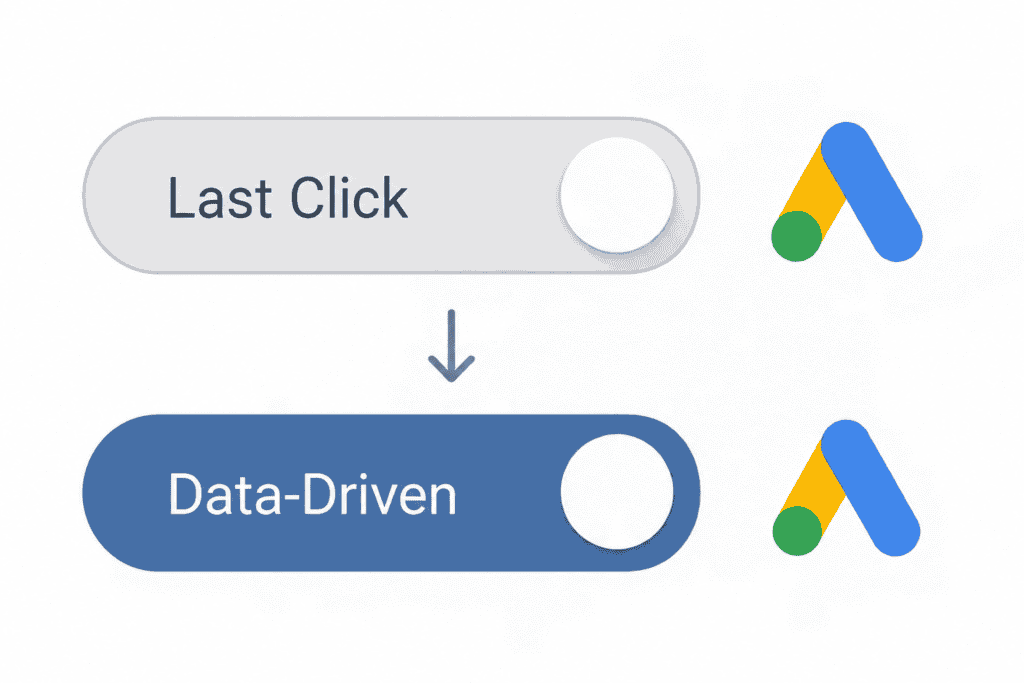
The single biggest change most reviews have missed happened in 2023, not 2026, and it still shapes every comparison written since. Google made data-driven attribution the default attribution model for most conversion actions across Google Ads and GA4, replacing first-click, linear, time-decay, and position-based models as the starting option.
The reasoning behind that switch is worth knowing, because it tells you how little those older models were actually used. Google deprecated those four rule-based models because fewer than 3 percent of conversions were using them by that point. Last-click remains available as a manual choice, but it’s no longer what a new account defaults to.
Any comparison still describing GA4’s attribution as last-click by default is describing a platform that no longer exists in that shape.
Pricing moved too, and I cover that shift tool by tool next, across seven of the most frequently compared products in this space.
Which marketing attribution software should you actually consider?
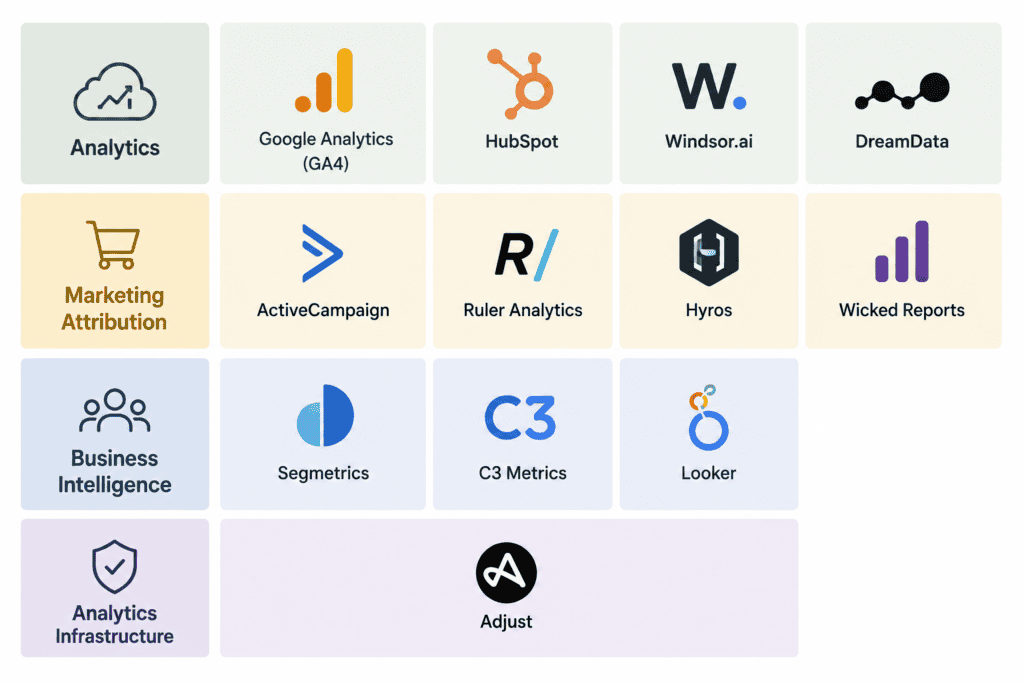
There’s no single best pick across these 13 tools. The honest answer depends on your business model, your sales motion, and your existing data stack.
Below, I’m crowning a fit per buyer type rather than forcing one universal winner.
Google Analytics, for any business not yet ready to pay for attribution
It’s free, and it now defaults to data-driven attribution across GA4, the same modeling approach the paid tools below use. The gap it can’t close is one I cover in the next section.
HubSpot, and the 2026 pricing change worth knowing first
HubSpot moved to per-seat pricing, and the tiers now look like this:
- Paid seats: roughly $7 to $20 a month
- Professional: around $800 a month
- Enterprise: around $3,600 a month, up from the roughly $3,200 figure older reviews still cite
Real onboarding fees add to that on the Professional and Enterprise tiers. I’d point this at a team already running HubSpot’s CRM and marketing hub, not one evaluating attribution tools cold.
Windsor.ai, for agencies pulling many ad accounts into one report
There’s a free tier, with paid plans starting at $19 a month billed annually ($23 month-to-month), confirmed unchanged in 2026.
It’s built around consolidating many separate ad accounts into one destination, which fits an agency’s actual workflow better than a single-account dashboard would.
DreamData, and the tier structure that quietly disappeared
DreamData collapsed from three public tiers to a free plan plus one custom-quote-only paid tier. The $599 and $1,499 monthly figures still floating around in older comparisons no longer exist as public prices.
This is a fit for B2B SaaS with a real sales cycle and an existing data warehouse to feed, not a starting point for a team without one.
ActiveCampaign, now priced by contact volume
It added a new Starter tier below its old Plus plan, and now prices by contact count, with no flat number shown by default. That’s a real shift from the simpler Plus-Professional-Enterprise structure most reviews still describe. I’d only recommend it to a team already using it for email and CRM.
Ruler Analytics, for UK-based B2B teams and the agencies serving them
Pricing now starts at £299 a month, down from the roughly £349 figure older reviews still cite, then rises by monthly visit volume:
- £499
- £999
- £1,499
It’s built around call tracking tied to attribution, a genuine gap for a B2B team fielding sales calls. Its multi-account structure also suits an agency consolidating several clients’ call data in one place.
Hyros, for paid-media-heavy DTC and ecommerce brands
Entry pricing now runs $129 a month for Shopify-only stores billed monthly, or roughly $230 a month for the general Business plan on annual billing. Both sit well above the $99 figure older reviews still cite, and higher revenue tiers require a demo. It’s built around ad-spend-to-revenue tracking for brands running heavy paid media.
Wicked Reports, for revenue-first ecommerce reporting
Pricing now starts at $499 a month, nearly double the roughly $260 figure older reviews still cite, then climbs:
- $699
- $999
- Enterprise at $4,999 a month, for brands above $50M in revenue
Reports here lead with revenue rather than pipeline stages, which fits ecommerce better than a B2B-shaped tool would.
Segmetrics, for course creators and info-product businesses
Pricing now starts at $57 a month, billed annually, well under the roughly $175 figure older reviews still cite, then rises:
- $197
- $397
- Custom Enterprise pricing above $10M in annual revenue
It’s purpose-built for the launch-and-evergreen-funnel shape info-product businesses actually run.
C3 Metrics and Looker, for enterprise teams with an existing data warehouse
Both are custom-quote only. Their value comes from feeding an already-built BigQuery or Snowflake setup, not from standing alone as a dashboard. Neither fits a team without that infrastructure already in place.
Adjust, for mobile app install attribution
Custom-quote only, and built specifically for mobile install attribution, a narrower job than the web-and-CRM attribution most of the tools above solve.
Adinton, for a narrow paid-search fit
Pricing isn’t publicly listed, so confirm directly. I’d evaluate it specifically for paid-search-heavy teams rather than as a general-purpose pick.
How much does marketing attribution software cost in 2026?
The real range runs from free to fully custom, and price alone doesn’t predict whether a tool earns its subscription.
At the low end, a small team can get started for tens of dollars a month:
- Google Analytics: free, and it already runs data-driven attribution out of the box
- Windsor.ai: starts at $19 a month
- HubSpot Starter seats: $7 to $20 each
At the high end, HubSpot Enterprise and Wicked Reports at scale run into the low thousands, while C3 Metrics, Looker, Adjust, and DreamData’s paid tier are custom-quoted only, with no public number at all.
That last group is really the story this year. More of these tools moved toward custom-quote-only pricing in 2026, not fewer, which makes a direct price comparison across all 13 tools harder than it was when this page was last written.
The honest framing ties back to the diagnostic section above. A $3,600-a-month tool that never changes a budget decision costs more than a free one that does. Price the tool against the decision it needs to change, not against the other 12 tools on this list.
Is Google Analytics enough, or do you need dedicated attribution software?
Google Analytics is enough for a business whose entire buying journey happens inside channels Google can already see. It stops being enough the moment a sale involves a sales conversation, an offline touchpoint, or a device switch GA4 can’t stitch together.
GA4’s move to data-driven attribution closes part of the gap that used to justify paying for a dedicated tool. What it still can’t do is see a deal that started with a Google ad, continued through three sales calls, and closed in a CRM GA4 never touches.
When I audit a B2B pipeline, that handoff- ad click to sales call to closed-won in a separate system- is exactly where free analytics stops seeing the truth. DreamData and Ruler Analytics close that gap by pulling CRM and sales data into the same model.
The real question isn’t free versus paid. It’s whether your buying process has touchpoints Google Analytics can’t see. If the answer is no, the free tier genuinely is enough.
Who does each type of attribution software actually fit?
Five buyer types cover most of the businesses evaluating this list, and each one maps to a different pair of tools above rather than one universal pick.
Find the one closest to your own business model first.
- B2B SaaS with a real sales cycle: DreamData or HubSpot, since both connect CRM and sales-touch data to the marketing side, which matters once deals involve a human seller.
- E-commerce and DTC brands: Windsor.ai, Wicked Reports, or Hyros, all built around revenue-first reporting tied to ad spend rather than CRM pipeline stages.
- Agencies managing multiple client accounts: Windsor.ai or Ruler Analytics, since both are designed to pull many separate ad accounts into one consolidated report.
- Enterprise teams with an existing data warehouse: Looker or C3 Metrics, since a data warehouse already in place is what makes either tool worth its custom quote.
- Teams just starting out: free Google Analytics with data-driven attribution already running, or ActiveCampaign if it already runs your email and CRM.
The honest anti-pattern is buying an enterprise-grade tool like Looker or C3 Metrics before the team has the data volume or headcount to act on what it shows. It is the pattern I see most often: a team pays for the enterprise tier, then never staffs anyone to actually run the queries it enables.
That is the same discipline behind evaluating any AI marketing tool without creating more subscription sprawl, and it applies here the same way it applies across all-in-one marketing platforms and KPI dashboard software.
Where do you start with marketing attribution software?
Name the one budget decision the tool needs to change before you take a single vendor demo. If you cannot name that decision, no dashboard on this list will make the choice for you.
That same discipline- diagnose the real constraint before you buy anything- is what Rate My Funnel applies to your whole customer journey.
Score your funnel honestly before you buy another dashboard
Frequently Asked Questions
What is the best marketing attribution software?
There is no single best pick. DreamData or HubSpot fit B2B SaaS with a real sales cycle, Windsor.ai or Wicked Reports fit ecommerce and DTC, Windsor.ai or Ruler Analytics fit agencies managing multiple accounts, and Looker or C3 Metrics fit enterprise teams with an existing data warehouse.
How much does marketing attribution software cost?
The range runs from free (Google Analytics) through the low hundreds a month (Windsor.ai, HubSpot’s entry tiers) to the low thousands (DreamData, HubSpot Enterprise, Wicked Reports at scale), with several tools now custom-quote only (C3 Metrics, Looker, Adjust, DreamData’s paid tier).
Is Google Analytics enough for attribution?
Yes, if your entire buying journey happens inside channels Google can already see. It falls short the moment a sale involves a sales conversation, an offline touchpoint, or a device switch GA4 cannot stitch together, which is exactly what dedicated tools like DreamData are built to close.
What is data-driven attribution?
The attribution model Google made the default across Google Ads and GA4 in 2023, replacing first-click, linear, time-decay, and position-based models after those saw under 3 percent adoption. It credits multiple touchpoints based on their actual contribution rather than crediting only the last click.
What is the best attribution software for SaaS companies?
DreamData or HubSpot, since both connect CRM and sales-touch data to the marketing side, which matters once deals involve a human seller and a real sales cycle.
What is the best attribution software for ecommerce?
Windsor.ai, Wicked Reports, or Hyros, all built around revenue-first reporting tied to ad spend rather than CRM pipeline stages.
About the author
Brian helps B2B founders install marketing + automation engines powered by Co-Thinking with AI. With 15+ years building predictable revenue systems, he's worked with SaaS, agency, and service businesses on 90-day done-with-you growth accelerators.
Ready to see your real growth gap?
Two minutes in the Growth Gap Scan and you walk away knowing the one thing capping your pipeline. Free, no obligation.