Why Most B2B SaaS Marketing Budgets Burn Before Strategy Fits

Founder, Grow Predictably · 15+ yrs building B2B revenue systems
TL;DR: B2B SaaS marketing in 2026 wins when you diagnose which Customer Value Journey stage is your binding constraint, then pick the tactic that fits. Most teams I’ve watched burn budget on lead generation, email outreach, and AI tooling before they know which stage is broken. The real unlock is treating strategy as a stage-by-stage diagnostic before reaching for tactics.
Key Takeaways:
- Diagnose your binding CVJ stage first, before you fund a single campaign.
- Match strategy to stage. Content fixes Aware and Engage. ABM fixes Convert. Success fixes Excite.
- ABM and buying-groups targeting refine who you talk to. They never substitute for picking the right stage.
- AI accelerates lead generation and email outreach, but it won’t diagnose your constraint.
- Track only the buyer engagement and conversion metrics tied to the stage you’re trying to fix.
When I audit B2B SaaS marketing budgets, the pattern is almost always the same. The team is running six campaigns in parallel, two new AI tools landed last quarter, an ABM pilot is mid-flight, and nobody can point to which stage of pipeline those investments are supposed to unblock.
The plan reads like a tactic shopping list assembled to please multiple decision-makers, not a diagnostic of where revenue is actually leaking. This article walks you through the Customer Value Journey as a stage-by-stage diagnostic, the Ideal Client Profile (ICP) work that makes each stage’s tactic land, and the custom setup that turns those choices into a 90-day operating cadence.
This is for the B2B SaaS founder, head of growth, or VP of marketing scaling from $1M to $10M ARR who is funding 7-plus parallel motions, watching CAC climb 20 to 40 percent year over year, and still cannot name which stage is the binding constraint.
The work that follows is what diagnose-first looks like at the budget layer: not ‘run more channels to see what sticks’, but ‘name the constraint stage, then fund the one tactic that clears it’.
What is B2B SaaS marketing in 2026?
B2B SaaS marketing in 2026 is the deliberate management of a business buyer’s path across the eight stages of the Customer Value Journey, from unaware to paying advocate. The discipline this year is diagnostic, anchored to whichever stage is the binding constraint on your pipeline this quarter.
Pick the stage first. The tactic mix becomes obvious.
Why the Definition Matters More Than the Tactics
Most teams I work with describe their marketing strategy as a list. Content marketing, paid, ABM, events, founder-led marketing, partner programs. That list tells me nothing about where your revenue is actually leaking.
I have watched SaaS teams add a fifth channel while the real problem sat at Excite, the post-purchase moment where your buyer’s gut decides if they made the right call.
Your marketing funnel is a sequence of stages, each with its own constraint and its own best-fit play. Conference marketing usually fits Engage. LinkedIn marketing fits Aware and Subscribe. Customer success motion fits Excite. Stage first, play second.
The Market Reality Shaping Every Campaign in 2026
The field is crowded and getting more so. According to Mordor Intelligence’s 2026-2031 B2B SaaS market report, the category is large and still expanding at double-digit rates, which means undifferentiated marketing costs more every quarter to produce the same result.
Differentiation is the marketing job.
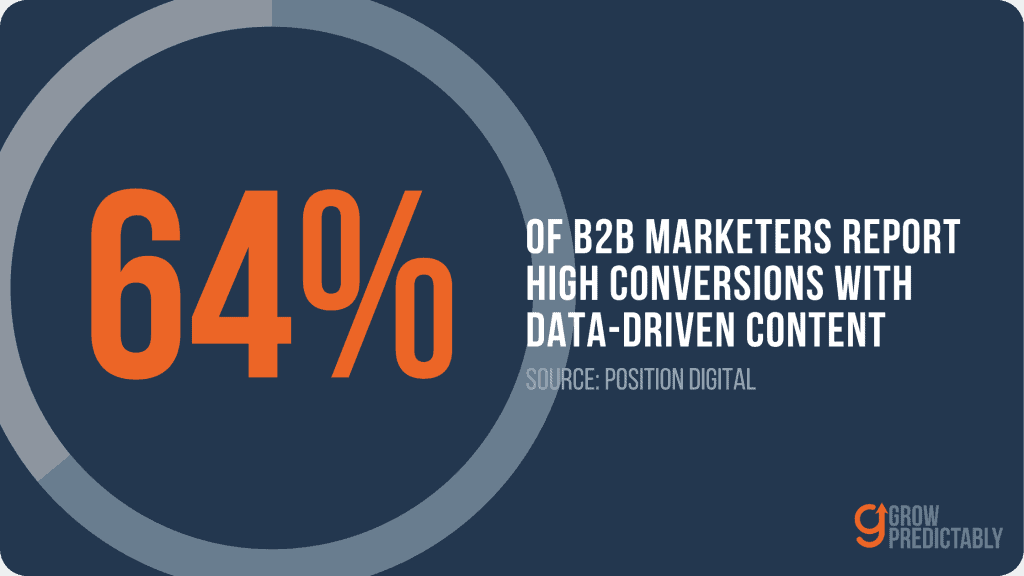
According to Position Digital’s 2026 SaaS marketing statistics research, 88% of B2B SaaS marketers reported positive ROI from proprietary research, and 64% said data-driven content brings higher conversion rates. If your content marketing program is recycling industry takes without original data, you are paying full price for the lowest possible lift.
Where does B2B SaaS marketing actually break down?
Most B2B SaaS marketing breaks down at the Convert-to-Excite handoff, not at the top of the funnel. I’ve watched teams pour budget into more traffic and more leads while the actual bottleneck sits downstream in onboarding, retention, and expansion. If your dashboard shows healthy MQLs and flat net revenue, your leak is post-sale.
The Non-Constraint Trap
The first time I applied Goldratt’s Theory of Constraints to a SaaS funnel, the pattern was obvious in hindsight. Marketing was running more cold calls, chasing more visibility, and shortening sales cycles at the top. The Convert stage barely moved. Non-constraints have excess capacity, so optimizing them only congests the system.
You add leads, the SDR team drowns, your enterprise sales motion slows down because reps are buried in unqualified pipeline, and the real bottleneck, which sits one stage later, gets worse instead of better. This is the trap I see in almost every B2B SaaS engagement: smart teams investing energy at the wrong stage, mistaking activity for progress.
Why the Convert-to-Excite Gap Is the Most Common Constraint
Growth problems in B2B SaaS are usually retention problems wearing a different costume. Every churned account resets the acquisition gains your team worked months to win. That’s why the Convert-to-Excite transition, the moment a closed deal turns into a customer who actually adopts and expands, matters more than any single acquisition tactic.
According to Zylo’s SaaS statistics report, 49% of companies with high gross revenue retention also maintain high net revenue retention, which tells you retention and expansion compound together. Fix the Convert-to-Excite gap first. Acquisition gains stick.
This is the core of Growth Gap Marketing: diagnose the stage that’s leaking before you spend another dollar at the top.
Which strategies fit which Customer Value Journey stage?
Match the strategy to the stage that’s actually capping your growth. Diagnose which Customer Value Journey stage is your binding constraint first, then pick the tactic mix that targets only that stage. Running tactics from the wrong stage produces activity without revenue, which is how most B2B SaaS marketing budgets quietly vanish.
Running the Stage-by-Stage Diagnostic
When I sit down with a SaaS team, I don’t ask what tactics they’re running. I ask where deals stall. Map your pipeline across the eight stages, instrument the transitions, and rank the drop-offs by severity.
Confirm what you’re seeing with your AEs and CSMs, then name the constraint in one sentence. That’s the diagnostic I run every time, and it borrows directly from Theory of Constraints — you can only fix one bottleneck at a time, so find the real one before you spend.
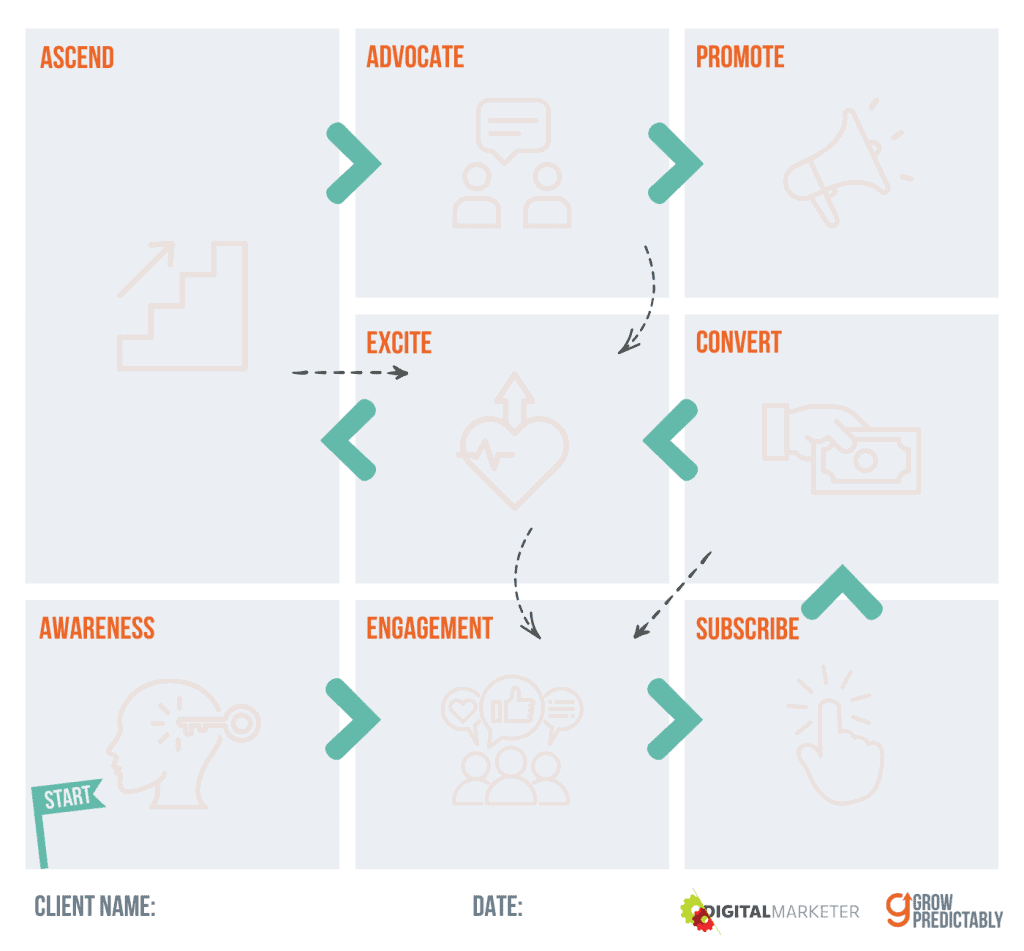
Here is the stage-to-strategy map I use:
- Aware — SEO, paid social, executive-led thought leadership; the binding constraint is reach into fit-for-ICP audiences (see our B2B content strategy deep dive).
- Subscribe — ICP-aligned lead magnets, gated research, segmented opt-in flows; the constraint is customer conversion from anonymous visitor to known lead.
- Convert — ABM for high-fit accounts, demo-experience design, free-trial activation; the constraint is converting fit-leads into closed-won.
- Excite — structured customer onboarding, time-to-first-value engineering, in-app aha moments; the constraint is getting paying customers to value fast enough to keep them.
- Ascend — vertical case studies, CSM-led upsell, customer expansion playbooks; the constraint is multi-product adoption.
- Advocate — interview-sourced case studies, structured referral programs, review-platform ops; the constraint is harnessing customer retention into pipeline.
- Promote — partner co-marketing, integration-led growth, channel enablement; the constraint is hitting the ceiling of direct acquisition.
Matching Your Strategy Budget to the Constraint Stage
Most teams spread budget evenly across stages, which guarantees the constraint never moves. Put 60-70% of discretionary spend on the constraint stage for a full quarter — and yes, that means starving other stages on purpose. Position Digital found 64% of SaaS marketers say data-driven content drives higher conversion rates; the operators who win pick one stage to be data-driven about, not all eight.
Engineering the Excite Moment
Without a defined aha moment, Ascend does not work. Advocate never activates. Promote stays silent. One client I worked with had four traffic sources and no funnel visibility — once we instrumented the journey, the real constraint turned out to be Excite, not Aware.
Define the aha as the smallest in-product event that signals value received, then engineer onboarding to deliver it on day one. That single move is what unlocks the retention-and-expansion flywheel everyone wants but few earn.
How do you measure B2B SaaS marketing ROI without falling for vanity metrics?
To measure B2B SaaS marketing ROI honestly, anchor every metric to a Customer Value Journey stage and the revenue it actually moves there. Vanity metrics report activity. Operator metrics report ARR movement.
Growth gap marketing depends on actionable metrics tied to real revenue, which is what separates dashboards that drive decisions from dashboards that decorate slides.
Why MQLs Are Not a Marketing ROI Metric
In my 15 years of marketing and growth experience, the MQL problem is not a measurement failure. It is an incentive failure. Teams report what is easy to pull from the dashboard, and MQLs, traffic, and paid advertising impressions are the easiest numbers in the building.
None of them tell you whether pipeline is forming, or whether the pipeline that does form will close.
According to HockeyStack’s Ultimate Guide to B2B SaaS Data Analytics, the meetings-per-lead metric tracks intent progression from the awareness stage through to purchase decision, illustrating why pipeline quality metrics outperform volume metrics.
That is the right shape for SaaS metrics, intent over inputs.
The Stage-Specific Metric Stack
Map your reporting to the Customer Value Journey and you will see the constraint:
- Aware: Share of Voice and organic sessions
- Subscribe: opt-in rate on the highest-intent magnet
- Convert: trial-to-paid conversion rate
- Excite: time-to-value and feature adoption rate
- Ascend: NRR and expansion MRR
- Advocate: referral rate and NPS-driven pipeline
Run paid advertising? Anchor spend to the Convert-stage conversion delta, not the click. When you tie each tactic to one stage and one revenue metric, your dashboard finally tells you what to fix next.
How does account-based marketing fit into B2B SaaS marketing?
ABM is a targeting and personalization layer, not a standalone strategy. It earns its budget when your binding Customer Value Journey constraint sits at Convert or Excite for high-ACV accounts. Apply it at Aware, and you are paying enterprise prices for top-of-funnel volume a content engine would deliver cheaper.
ABM as a Stage Amplifier, Not a Strategy
Think of ABM as an amplifier on the stage you have already diagnosed. The mechanism is intent data plus firmographic segmentation. According to Markntel Advisors’ B2B SaaS market research, platforms like Revleads now use intent-driven targeting and pay-per-lead models to connect vendors with high-intent buyers, which is the engine that makes ABM actionable rather than speculative.
Without that signal, ABM tools produce activity, not acceleration.
When ABM Earns Its Budget, and When It Doesn’t
In my experience, ABM works for mid-market and enterprise SaaS where ACV justifies the personalization cost and your B2B content strategy feeds the named-account narrative. Across the SMB SaaS teams I have worked with, ABM applied to sub-$10k ACV segments routinely costs more per closed deal than a well-structured inbound motion built around growth loops.
If your churn rate is the real bleed, ABM will not fix it. Run platform testing on your Convert-stage data first, then decide.
How should B2B SaaS marketing leaders use AI in 2026?
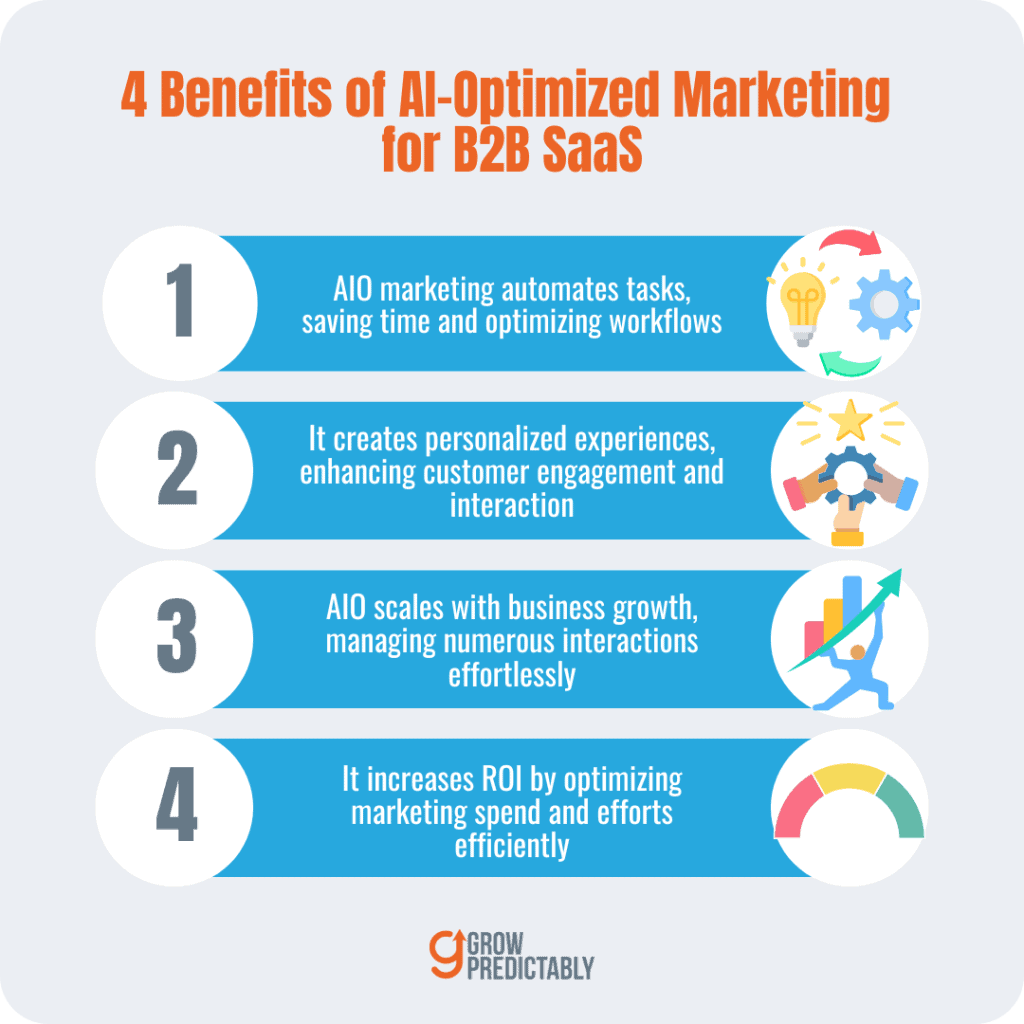
Deploy AI to scale execution inside a diagnosed CVJ stage, not to pick the stage for you. If your team adopts AI tooling before naming the binding constraint, output volume rises and qualified pipeline doesn’t. The leaders winning in 2026 use AI to amplify a strategy that’s already correct, not to invent one.
AI as Execution Amplifier, Not Strategy Replacement
In every engagement I’ve watched where a team turned on AI tooling before diagnosing their constraint, the dashboard lit up and qualified pipeline stayed flat. AI compounds whatever’s upstream of it. If you’re stuck at Convert and you point AI at Aware, you’ll get more traffic, weaker SEO impressions, and the same broken funnel. Diagnose first, automate second.
The highest-ROI AI work I see inside lean B2B SaaS marketing teams isn’t a customer-facing product. It’s internal AI automation tailored to your own workflow, content ops, and data analysis. That’s where your leverage lives. Building a public AI SaaS feature is a product decision, not a marketing one.
Where AI Delivers Real Leverage in the CVJ
My Human-AI Fusion approach inverts the usual order. Start with raw human context: a real pain you heard on a call, your ICP’s actual objection, the founder’s earned point of view. Then use AI to scale that output into variants, distribution, and scoring.
The business outcomes and conversions follow when the human input is honest. Reverse the order and you’ll generate a lot of work that moves no pipeline.
How do you build a B2B SaaS marketing function that compounds instead of running in place?
A compounding B2B SaaS marketing function moves one Customer Value Journey stage closer to capacity each quarter, then re-diagnoses the next binding constraint. Treadmill marketing runs all stages in parallel and never resolves the stage that’s actually capping pipeline. The whole game is sequencing.
The Compounding Loop vs. the Treadmill
I borrowed this from manufacturing. Treat your customer journey as a system with one bottleneck, and resist optimizing every part equally. That’s the Theory of Constraints applied to growth. The loop is simple.
Diagnose the constraint, deploy the stage-matched strategy, measure the stage-specific metric, resolve it, then move to the next binding stage.
I’ve sat with teams that obsessed over traffic for two years. Their dashboards glowed. Their qualified pipeline didn’t move. They were running the treadmill, pouring effort into the Aware stage while the actual constraint sat at Convert.
According to Benchmarkit’s 2025 B2B Marketing Benchmarks, drawn from 323 B2B technology companies, compounding functions are measurably distinguishable from treadmill ones on budget productivity. You can tell which one you’re running by whether last quarter’s diagnosis informed this quarter’s investment.
Stage-by-Stage Elevation: What ‘Done’ Looks Like at Each Stage
If you’re early-stage, don’t start with SEO or paid. Start with founder-led LinkedIn consistency until you’ve built a trusted audience. That’s the cheapest first stage to clear, and it makes every later channel work better.
Once the Aware stage is producing fit-for-engagement leads, your subscription model conversion math gets honest. Then you move upstream. Homepage optimization for Convert. Segmentation campaigns for Excite.
Digital promotion experiments for Promote. Each stage gets cleared in turn. As I’ve said before, “Growth gap marketing thrives on actionable, not vanity metrics, to ensure real progress.”
⮞ How long does it take to see results from B2B SaaS marketing?
Most teams expect results in a quarter. The honest answer is six to twelve months for content and SEO to compound, two to four months for paid and ABM to produce qualified pipeline, and four to eight weeks for segmentation campaigns to flush out the now-buyers from your existing list.
If you do not see directional movement in those windows, the problem is usually targeting or offer, not channel selection. Pick the binding constraint first and measure against the timeline that channel actually requires.
⮞ What does a B2B SaaS marketing team look like at $1M to $10M ARR?
At $1M ARR you usually have one marketer plus a founder doing positioning. By $5M you add a content lead and a paid or ops generalist. By $10M you have a head of marketing, two specialists (demand and content), and a contractor bench for design, video, and SEO.
Benchmarkit’s 2025 B2B Marketing Benchmarks show headcount scaling sub-linearly with revenue, so a custom setup that buys speed through contractors and AI workflows usually beats a full in-house build.
⮞ What tools do you actually need to run B2B SaaS marketing in 2026?
Five categories cover most of what you need: a CRM with marketing automation, a content CMS, a paid-ads management layer, an analytics stack (GA4 plus a product analytics tool), and a basic AI workflow setup for content and outreach.
Avoid the “buy 14 point solutions” trap. Industry data on SaaS spend shows B2B SaaS teams are actively consolidating tech stacks to cut overlap and waste, so start lean and add only when a specific bottleneck appears.
⮞ How do you market to multiple decision-makers in a B2B SaaS buying committee?
Modern B2B SaaS purchases involve multiple decision-makers, usually six to ten people across procurement, IT, finance, and the line-of-business team. Map each role to a different content type. The economic buyer needs ROI math and risk-reduction proof.
The technical evaluator needs documentation and integration detail. The end user needs workflow demos. A single asset cannot serve all of them. Your job is to make sure each persona finds the artifact pitched at their specific concern within two clicks of any landing page.
How do you put b2b saas marketing into practice?
If you take one action this week, map your last twenty closed-won and closed-lost deals against the eight stages of the Customer Value Journey and circle the stage where the most deals stalled — that single transition is your binding constraint, and it tells you which strategy from this article to run first. Everything else can wait.
As AI lowers the cost of content, cold outreach, and product launch motions, the teams that compound will be the ones who diagnose before they deploy.
Diagnose your binding CVJ stage
Want to go deeper? Read B2B content strategy for the Aware/Engage playbook, or AI vs Marketing Automation for where intelligence belongs in your stack.
About the author
Brian helps B2B founders install marketing + automation engines powered by Co-Thinking with AI. With 15+ years building predictable revenue systems, he's worked with SaaS, agency, and service businesses on 90-day done-with-you growth accelerators.
Ready to see your real growth gap?
Two minutes in the Growth Gap Scan and you walk away knowing the one thing capping your pipeline. Free, no obligation.