Free Customer Avatar Generator | Free PDF Download (Limited Time)

Founder, Grow Predictably · 15+ yrs building B2B revenue systems
TL;DR: ICP filters who gets in the door. Avatar shapes how you talk to them once they do. Build both, and use the 30-minute, 7-section canvas to install the avatar layer your messaging is missing.
Key Takeaways:
- A customer avatar is the human inside the account. It captures the demographics, fears, wants, and language of the person who actually buys, not the company you’re targeting. That’s a different artifact (the ICP).
- Avatar and ICP work together; neither replaces the other. ICP filters who you let in the door using firmographic gates (industry, revenue, team size). Avatar shapes how you message them once they’re in using psychological depth (fears, wants, the words they use). I’ve watched B2B teams run leaky funnels for years because they had one and not the other.
- The visible symptom of a missing avatar is traffic up, demos full, pipeline flat. Without a documented buyer, your copy speaks to a generic decision-maker who doesn’t exist, so the right people never raise their hand. The framework functions like a map, guiding your customer’s journey from a state of ambiguity to clarity and conviction. If your messaging can’t name your buyer’s 3am thought, it can’t move them off the fence.
- The 7-section canvas takes 30 minutes per avatar. Before/After scenario, persona, demographics, purchase drivers, expected outcomes, fears, wants. You fill it in once and reference it every time you write a post, demo, or email.
- Multiple avatars beat one big composite. A B2B SaaS targeting both freelance designers and small agencies needs two avatars, not one blended caricature. Build them in priority order: most-revenue avatar first.
- Refresh quarterly. Avatars drift as your business shifts. New product line, new ICP, new pricing tier; your avatar moves with it. Treat the canvas as a living document, not a launch artifact. According to Adele Revella’s Buyer Personas research, buying decisions hinge on five specific buyer-insight categories that map nearly one-to-one to the canvas below.
A Customer Avatar is a structured profile of the person you want to message — the human inside the account, with their fears, their wants, and the exact words they use to describe their problem. It is not the same as an Ideal Client Profile (ICP), which describes the account you want to qualify (industry, company size, revenue, tech stack).
I’ve spent 15 years building marketing systems for B2B SaaS, e-commerce, and services businesses, and the operators who win at messaging build BOTH — an ICP that filters who gets through the door, and a Customer Avatar that shapes how you talk to them once they’re in.
The 7-section worksheet below is the canvas I run with every new client to build the avatar in under 30 minutes.
It is one piece of a bigger diagnosis. I reach for it once I know which constraint is actually capping a client’s growth, because sharper messaging only pays off when messaging is the thing holding you back.
What is a Customer Avatar?
A customer avatar is a one‑page profile of your ideal buyer, built from real customer data and discovery‑call transcripts rather than guesswork. It captures the key details you need to write directly to one specific buyer instead of “everyone who might be interested.”
In practice, a strong customer avatar documents:
- Who they are before using your product (role, context, and current tools).
- What scares them and slows them down (risks, constraints, bad past experiences).
- What they want and who they’re trying to become.
- What specifically drives them to buy now instead of “later.”
- How their life looks and feels after your product is working.
Marketers use a customer avatar as a single decision filter for everything they publish:
- Does this topic map to my avatar’s real frustrations and goals?
- Does this copy use words my avatar actually said on a call?
- Does this offer move my avatar toward a clear Before/After transformation?
If the answer is no, you don’t ship it. That upstream clarity is what turns random tactics into a coherent system that compounds over time instead of burning budget on audiences who were never going to buy.
Adele Revella, founder of the Buyer Persona Institute and author of the canonical Buyer Personas, frames the discipline as “insight, not invention.” A useful avatar is:
- Built from interviews, sales calls, and post‑purchase feedback.
- Written in the customer’s exact phrases as much as possible.
- Updated as your product, pricing, and best customers evolve.
It’s not a persona you sketch from imagination and forget in a Notion folder — it’s a synthesis of what real buyers say when they think they’re “just talking.”
A customer avatar, also known as a buyer persona, is a made-up character embodying traits typical of your target market, shaped using market research and authentic data from your own existing customers and clientele.
What’s the Difference Between a Customer Avatar and an ICP?
An Ideal Customer Profile (ICP) tells you which accounts to target. A customer avatar tells you which person inside those accounts you’re talking to, and what will actually make them move.
- ICP = “We sell to 200–500 person B2B SaaS companies in North America.”
- Customer avatar = “Sarah, VP of Marketing at a 250‑person SaaS, under pressure to prove pipeline from paid channels in the next 2 quarters.”
The ICP keeps your lists clean. The avatar keeps your messaging sharp. When the avatar is missing, you get the classic pattern: traffic and impressions go up, but calls and demos are filled with people who were never going to buy, because the copy doesn’t match what real buyers say on sales calls.
That’s exactly why persona‑driven messaging tends to outperform generic campaigns.
In the Edelman–LinkedIn B2B Thought Leadership Impact Report, 75% of decision‑makers said a piece of thought leadership led them to research a product they were not previously considering, because it spoke directly to their situation, not a vague “decision‑maker” persona.
In a MarketingSherpa study cited in Windmill Strategy’s B2B persona analysis, persona‑based email campaigns hit a 7% conversion rate—well above typical B2B email benchmarks. The mechanism underneath both numbers is simple: specific copy converts; generic copy doesn’t.
The Customer Avatar Canvas is how you make that specificity non‑negotiable. It forces you to choose one buyer, one set of frustrations, and one clear transformation, instead of trying to please everyone. In practice, the arc looks the same across B2B SaaS, agencies, and coaching offers:
- Before: the ICP slide is clear enough, but “who this is for” is fuzzy; there’s plenty of traffic, and low close rates.
- After one serious avatar pass: same channels, same offers, but the right people start raising their hands because the words finally sound like theirs.
That’s the division of labor: ICP for “who should be on the list,” customer avatar for “who this page, email, or ad is actually written for.”
Build Your Ideal Customer in Minutes—FREE!
Ready to turn your customer avatar into an actionable B2B profile?
Why Should B2B Operators Build a Customer Avatar?
A customer avatar will help you, as a B2B operator, turn every marketing and sales decision from a guess into a focused test against one specific buyer, which predictably improves messaging, conversions, and CAC over time.
When a real avatar is in place, the payoffs are concrete:
- A measurable lift in CAC and conversion. When messaging, content, and sales all point at the same buyer, acquisition costs drop and close rates rise — not because the channel changed, but because the words finally match the person on the other side of the screen.
- Sharper messaging. You stop writing for “anyone in B2B” and start writing for one defined buyer, so your copy gets tighter, hooks land harder, and conversion rates climb. The Core Message Canvas becomes a tailor-made suit, fitted to each customer avatar — without the avatar, the suit doesn’t fit anyone.
- Faster content decisions. “Would my avatar deem this valuable?” becomes the only question that matters when you choose a topic, angle, or channel, which kills half the internal debate and saves hours every week.
- Better ad spend efficiency. Ad copy, landing pages, and lead magnets all align to the same buyer language and Before/After story, so campaigns convert higher at the same targeting cost instead of burning budget on the wrong clicks.
- Cleaner sales conversations. Sales reps can mirror the avatar’s language on calls, so buyers feel understood in the first few minutes instead of halfway through a deck; trust builds faster, and objections surface earlier.
Utilizing Our Customer Avatar Template
To kickstart your journey, we’ve designed a straightforward customer avatar worksheet.
This free template will guide you in constructing your customer avatar, one step at a time.
- With your customer avatar in hand, it becomes a touchstone for all your marketing pursuits. For instance, when crafting marketing content, ponder, “Would my avatar deem this valuable?”
If the response is negative, it’s likely not worth producing.
- Your customer avatar also assists in determining which products or services to provide. Ask yourself, “Would my avatar be intrigued by this product/service?”
If the answer is no, then it’s probably not worth introducing.
In essence, your customer avatar sheet serves as your chief decision-maker, enabling you to conserve time and money by ensuring your marketing endeavors zero in on the right audience.
Next, we’re going to break down the different parts of the Customer Avatar Canvas and how you can best fill in these sections.
Before that, access your own Customer Avatar Canvas below to get a more personal feel.
➡️ Get Started With Your FREE Customer Avatar Canvas Right Here!
What Goes Into the 7-Section Customer Avatar Canvas?
The 7‑section Customer Avatar Canvas breaks one ideal buyer into seven simple pieces so you can see their transformation, identity, context, and buying logic on a single page.
The first five sections are the core; two scaffolding sections (purchase drivers and expected outcomes) make it easier for first‑time builders to fill in.
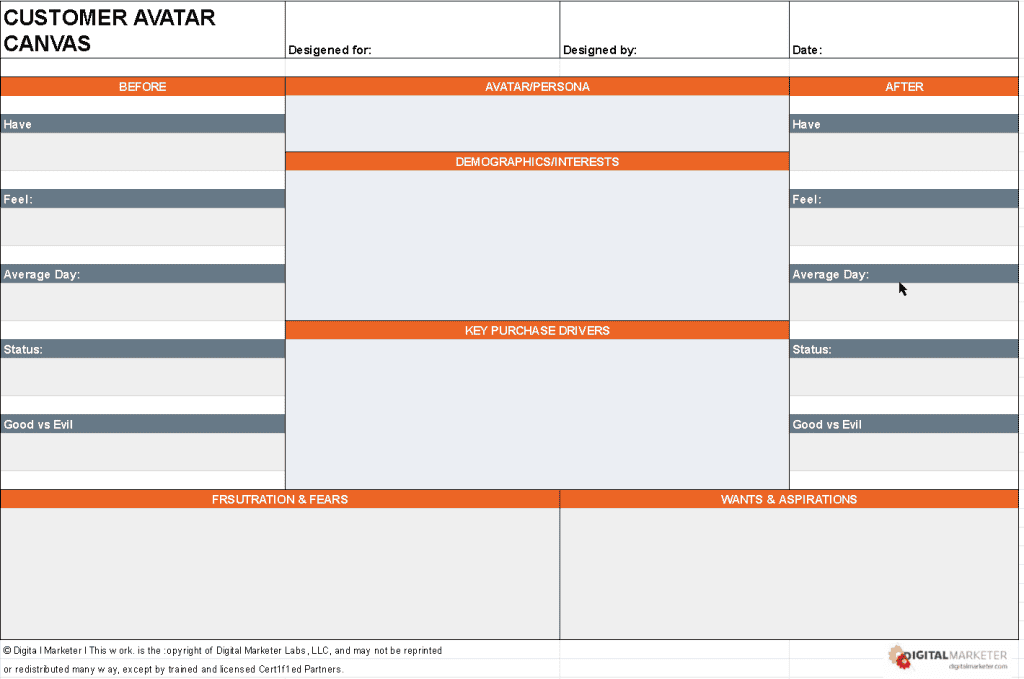
Upon downloading our customer avatar worksheet template, you’ll receive a complete fill-in-the-blank and boxes format with guidelines on how to finish it.
The customer avatar template encompasses the following sections:
1. Before/After Scenario
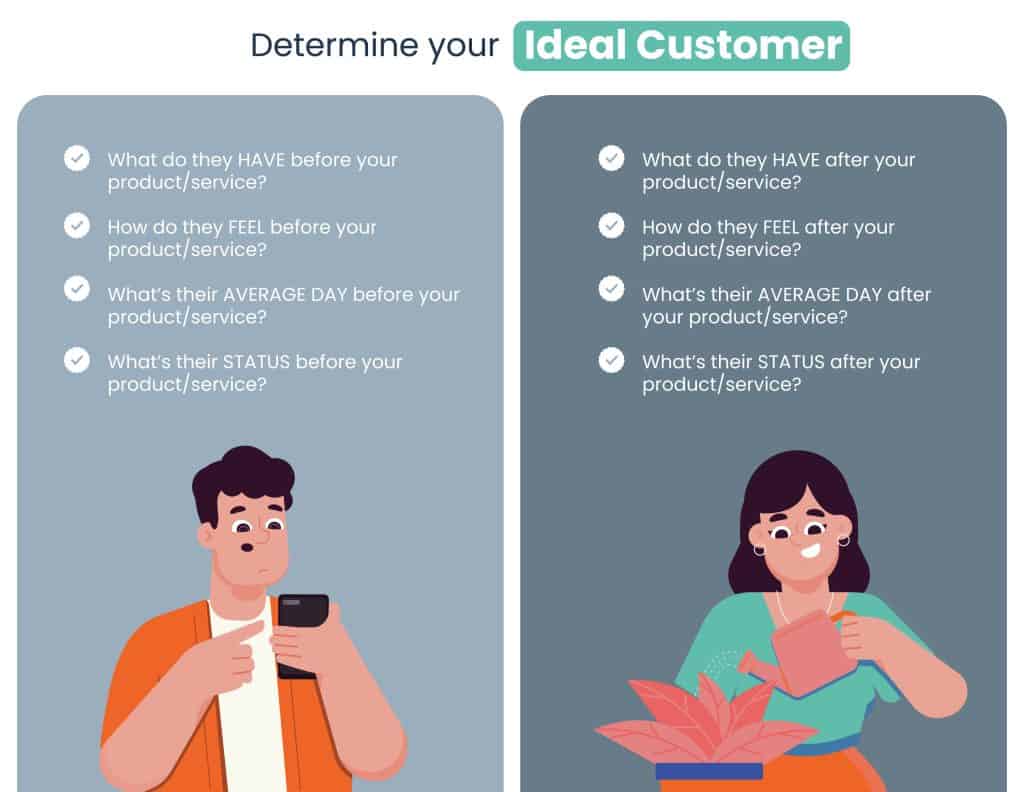
The Before/After Scenario describes your customer’s life before they buy and after your product is working. It’s the transformation spine every other section feeds.
Focus on writing the before and after in the buyer’s own words:
- What did they have before vs after?
- How did they feel before vs after?
- What did an average day look like before vs after?
- How did their status look before vs after (how others saw them)?
If you catch yourself writing in marketing‑speak (“they had a problem; we solved it”), go back to sales‑call transcripts and pull exact phrases. If you can’t, your real bottleneck isn’t the Canvas — it’s listening discipline.
2. Avatar/Persona
The Avatar Persona turns an abstract “target market” into one specific human you can write to. Give the avatar:
- A name and a representative photo or illustration.
- A role title and level of seniority.
- One short identity line (for example: “Sarah, VP of Engineering at a Series B SaaS, 6 years in role, second time leading a team this size”).
The goal isn’t fiction for its own sake; it’s making “Would Sarah open this email?” a real question your team can answer. If you sell into multiple buyer types, you’ll eventually build one avatar per ICP segment.
3. Demographics and Interests
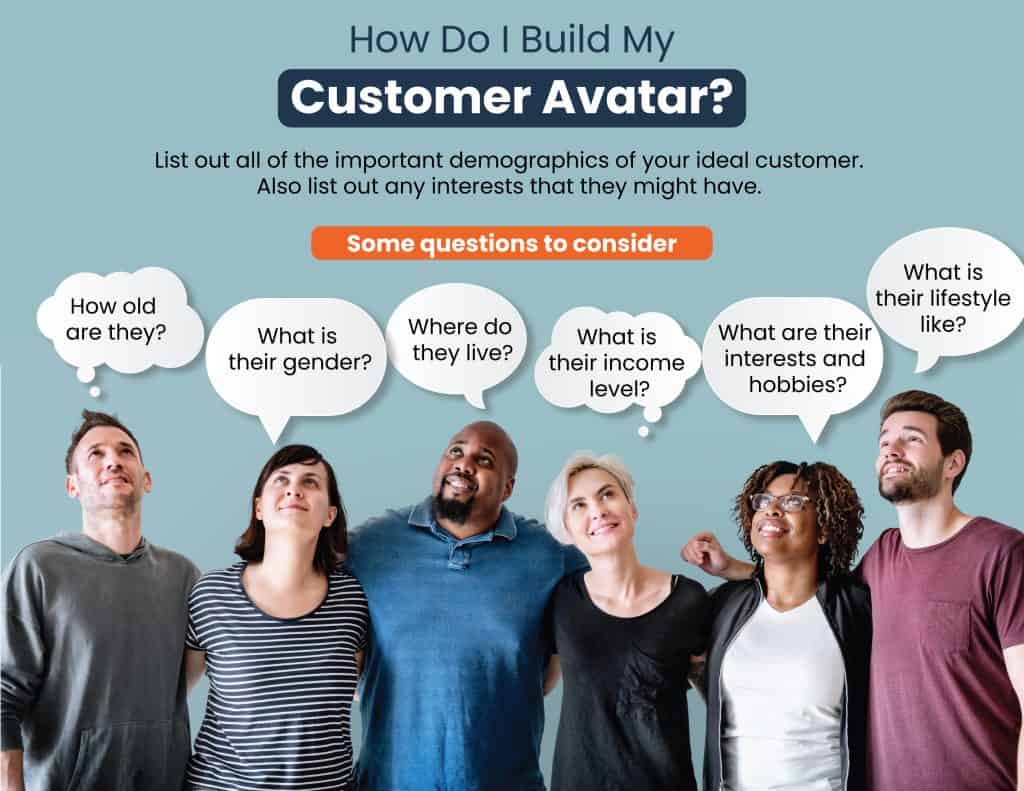
Demographics ground your avatar in a real‑world context; interests show you where and how to reach them. Capture:
- Age range, gender (if relevant), location, income or budget authority, education, and key lifestyle markers.
- The publications, podcasts, conferences, and online communities they actually pay attention to.
In B2B, also add:
- Team size and who they report to.
- The primary metric they own.
Those details are what turn a generic persona into a buyer with leverage and a clear success definition.
4. Key Purchase Drivers
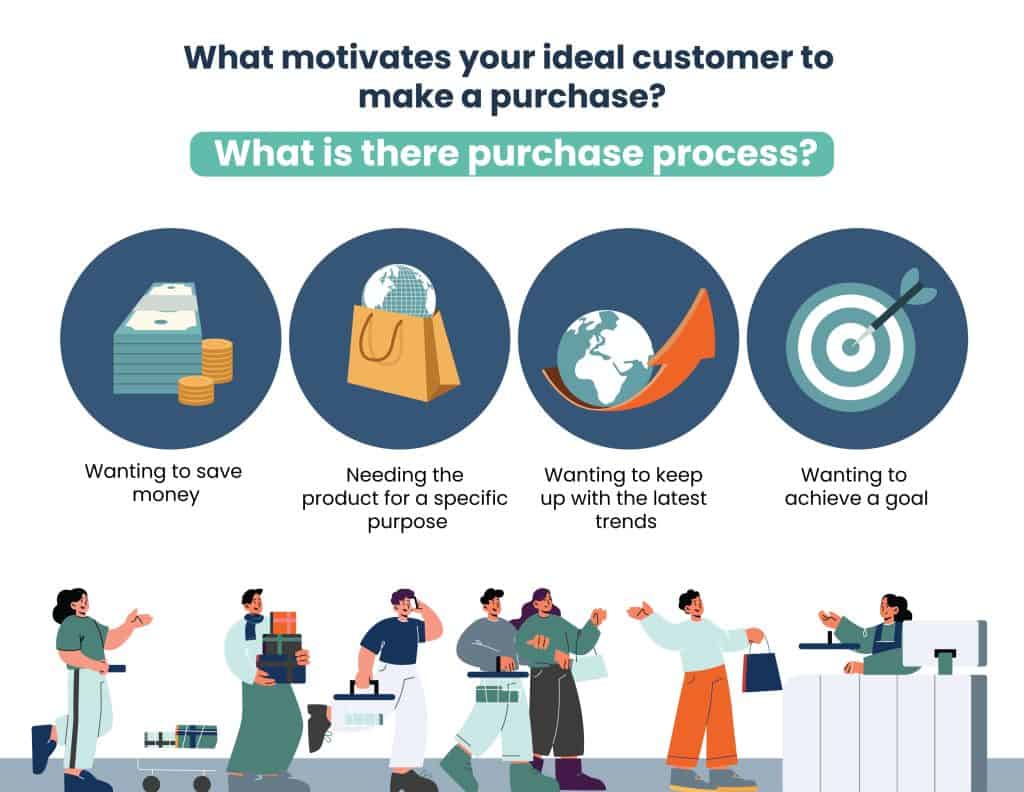
Key Purchase Drivers are the specific reasons this avatar would say “yes” now instead of later. List them as concrete sentences, not abstractions:
- “Sarah needs to cut deployment time from 4 hours to under 30 minutes so she can stop being interrupted on weekends.”
- “Marcus needs a way to attribute pipeline to paid social so he can defend his budget at the next board meeting.”
If you can’t write at least three specific drivers per avatar, you don’t know this buyer well enough yet. Go back to interviews and sales calls before polishing the Canvas.
5. Expected Outcomes
Expected Outcomes spell out what your avatar is trying to achieve over the next 12–24 months, both quantitative and qualitative.
Purchase drivers explain why they buy now; outcomes explain what “this worked” looks like over time.
Capture outcomes in the buyer’s terms, not the ones you wish they had:
- Targets they’ve mentioned on calls.
- Promotions, milestones, or reputation shifts they’re aiming for.
When you map your messaging to these outcomes, you stop selling features and start selling the transformation your buyer is already picturing.
6. Fears And Frustrations
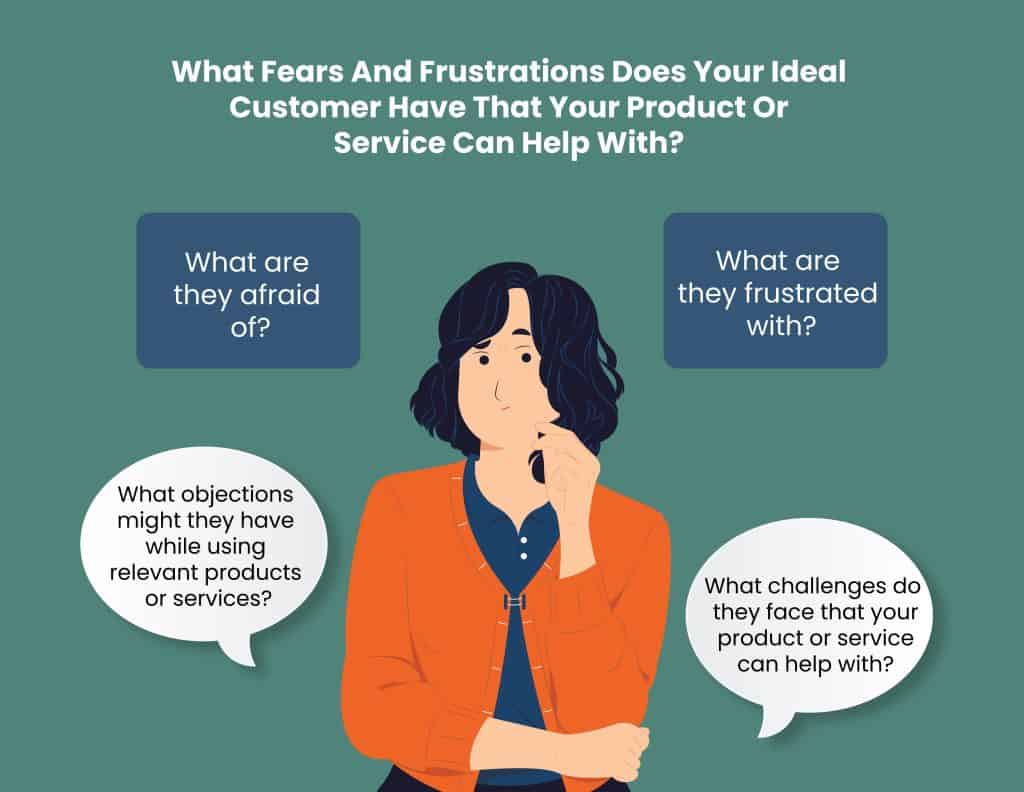
Fears and Frustrations is the highest‑leverage section, because it gives you language for the “3 a.m. thoughts” and daily friction your copy needs to name.
Capture both:
- Fears: career risk, missed targets, public failure, being seen as the person who chose the wrong vendor.
- Frustrations: tools that don’t work, clunky processes, wasted time, decisions they keep having to defend.
For example:
- Fear: an entrepreneur worried that trying a new content format will make them look unserious to their existing audience.
- Frustration: a B2B founder who can’t grow her email list despite multiple lead magnets and a webinar series.
Both show up in messaging as hooks, not fluff.
7. Wants and Inspirations
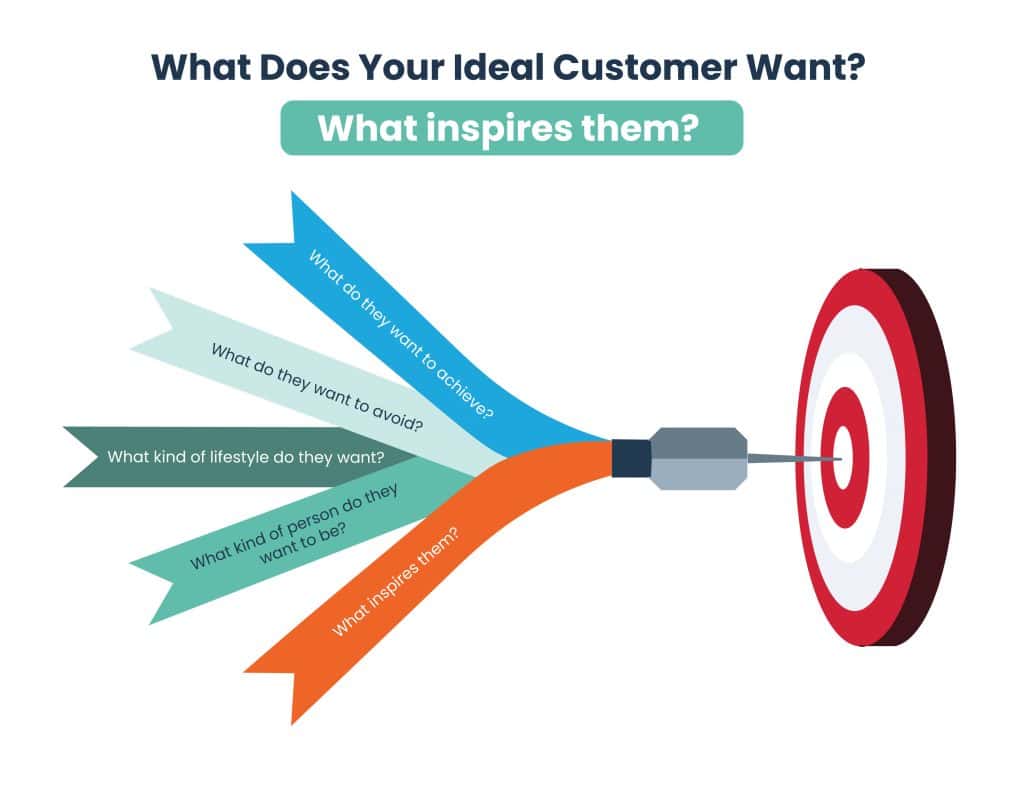
Wants and Inspirations describe what your avatar is moving toward — the role, lifestyle, and identity they’re trying to step into. This is where your most resonant messaging comes from, because aspiration is often what finally pushes a buyer to act.
Answer questions like:
- What kind of leader do they want to be known as?
- Whose career or company do they quietly admire?
- What does “things went right” look like in their mind?
Then pair those answers with the fears you’ve already captured. Strong copy holds both: “You’re afraid of being the founder who couldn’t scale. You want to be the founder who hit the IPO without burning out the team.”
Using an avatar worksheet forces you to think about your target customer beyond their demographics.
You’ll consider their needs, wants, pain points, and goals so that you can create a well-rounded portrait of your ideal customer.
This template is designed to help you swiftly and seamlessly generate a customer avatar for your business.
Simply follow the guidelines and fill in the sections provided to construct a detailed representation of your perfect customer.
Then, use this information to guide your marketing tactics and connect with your target audience.
When Should You Build Multiple Customer Avatars?
You build multiple customer avatars when you sell to two or more genuinely distinct buyer types inside the same overall ICP, and each type needs different messaging to convert.
If changing the role changes the fears, wants, and language, you need a separate avatar.
In practice, that looks like:
- A B2B SaaS that sells to both engineering leaders and product managers. Same company profile, different day‑to‑day, fears, and buying triggers — so two avatars, not one blended composite.
- A B2B services firm that sells to both startup founders and enterprise procurement. Different ICPs and different buyers inside each, which means separate ICPs and one avatar per buyer type within them.
The sequence matters as much as the count. Build avatars in revenue order: your most valuable buyer first, then the next, and so on. Don’t try to crank out six avatars in a weekend; you’ll end up fabricating half of them.
Build one, live with it, listen to that buyer for a couple of weeks in sales calls and support tickets, then build the next from real language.
The trap to avoid is the “composite” avatar that tries to represent multiple buyer types at once. A composite is too vague to write sharp copy for, so your messaging slides back into generic “decision‑maker” language that feels safe and converts poorly. One distinct buyer type, one avatar, every time.
How Do You Use the Avatar Canvas in Practice?
You use the Customer Avatar Canvas as a living reference that every marketing and sales decision has to pass through, so you stop guessing and start testing against one specific buyer.
It should be on the wall, in the doc, and in the room whenever you choose topics, write copy, or review sales calls.
The pattern when teams skip this step is the canvas-as-artifact: built once, posted on a Notion page, never referenced again, and the messaging slides back to generic copy within a quarter.
Once the Canvas is filled in, install three habits to make it load-bearing:
- Use the avatar as a content-decision filter. Before you publish any post, article, video, or email, ask: “Would my avatar deem this valuable right now?” If the answer is “maybe” or “sort of,” it’s a no. This one question kills half the internal debate and keeps your content calendar focused on problems your avatar actually has.
- Lift the avatar’s exact language into your copy. Don’t paraphrase the Fears, Wants, and Before/After sections. Pull phrases verbatim into headlines, subject lines, ad hooks, and demo intros, so your buyer sees their own words mirrored back to them. The Canvas is not just a profile; it’s a copy bank.
- Continuously update the Canvas from sales calls. Treat every sales conversation as new data for the Canvas. Ask reps to log one new fear, want, or transformation phrase after each demo, and update the Canvas weekly. That way, the avatar evolves with your pipeline instead of drifting a year behind your real customer.
A simple example: a B2B SaaS targeting freelance designers fills in their Canvas and names the avatar “Maya,” a 32-year-old freelance designer in year four of her business, frustrated that referrals are flat, and she’s always chasing project work instead of being chased.
Her 3 a.m. thought is, “What if I never figure out how to stop trading hours for dollars?” Her want is, “I want a six-figure design business that doesn’t depend on me being on Zoom 30 hours a week.”
Once Maya is on the wall, the team rewrites their landing page hook from “Project management for designers” to “Stop trading hours for dollars: the freelance design system Maya uses to scale without scaling her hours.”
Nothing else changes. The page hook is the only thing different. Conversion lifts, because the page finally sounds like Maya.
How To Use The FREE Customer Avatar Worksheet
Are you set to craft a customer avatar?
Take a look at how this sample canvas below is slowly taking shape for a SaaS brand that’s targeted toward freelancers.
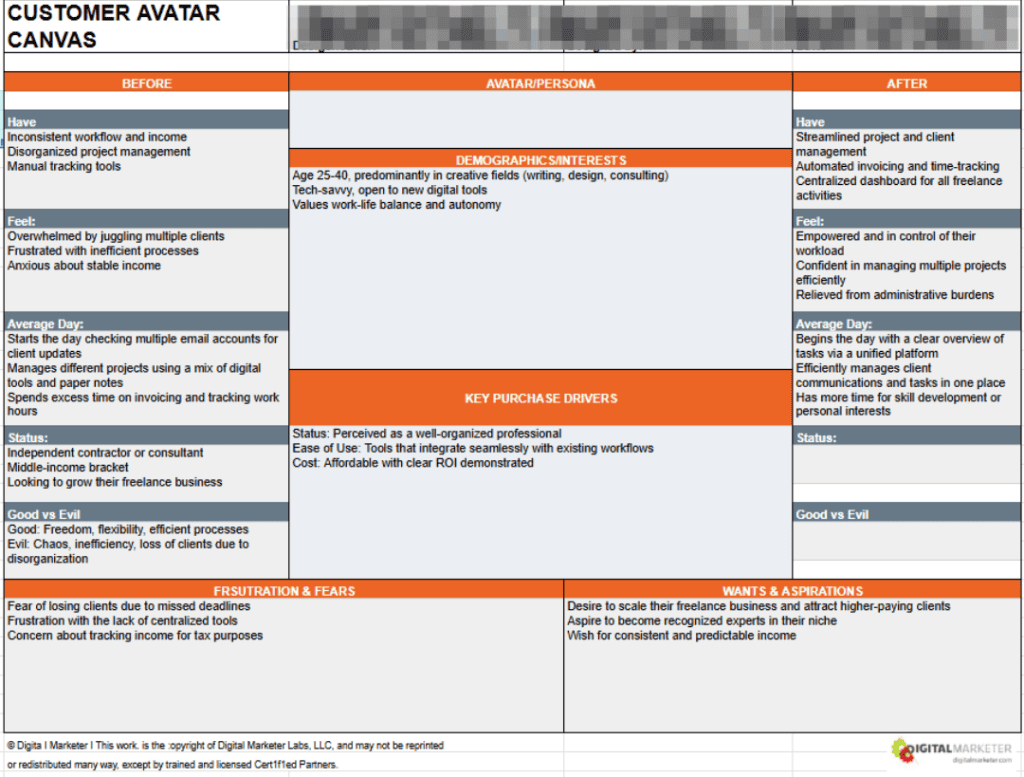
A straightforward way to utilize our customer avatar worksheet is by downloading the Google Sheet and completing it.
- With the worksheet in hand, take a moment to ponder your perfect customer. What are their demographics? What do they appreciate and dislike? What are their shopping habits?
- Once you comprehend who your ideal customer is, begin populating the worksheet. Incorporate as much detail as possible to become well-acquainted with your customer.
- You can efficiently and effortlessly record all the critical information about your perfect customer on just one page.
- This approach will sharpen your marketing efforts, drawing in more of your ideal customers.
It’s important to remember that your customer avatars are not set in stone. As your business grows and changes, so will your ideal customer.
This is why it’s advisable to refresh your customer avatar regularly, ideally every two months or so.
Upon completing the worksheet, you’ll gain a deeper understanding of your ideal customer, their desires, and how to connect with them.
Leverage this knowledge to develop a marketing campaign centered on captivating your perfect customers.
➡️ Get Started With Your FREE Customer Avatar Canvas Right Here!
Frequently Asked Questions About the Customer Avatar Canvas
What’s the difference between a customer avatar and a buyer persona?
The terms are often used interchangeably, but in operator practice the customer avatar is the more rigorous version. A buyer persona typically captures demographics and a few interests; a customer avatar adds the psychological layer — fears, wants, before/after transformation, and verbatim buyer language — that makes it usable for messaging. If your ‘persona’ is a one-paragraph bio, you have a persona. If it has 7 sections including a Fears block and a Before/After scenario, you have an avatar.
How many customer avatars should a B2B business have?
One per distinct buyer type within your ICP, built in priority order. A B2B SaaS selling to both engineering leaders and product managers needs two avatars even though the company is the same. A B2B services firm selling to startup founders and enterprise procurement needs two ICPs and two avatars per ICP. Don’t try to build six in one weekend — build the highest-revenue avatar first, live with it for two weeks, then build the next.
How often should I update my customer avatar?
Quarterly review, weekly micro-refresh. The micro-refresh comes from sales-call language: log one new fear, want, or before/after phrase from every demo and add it to the canvas weekly. The quarterly review catches bigger shifts — new product line, new ICP segment, repricing, or a market change that moved your buyer’s priorities. Stale avatars produce stale messaging, so treat the canvas as a living document, not a launch artifact.
Do I need to interview customers to build an avatar, or can I use sales-call recordings?
Sales-call recordings are usually enough to start, especially with tools like Gong, Fathom, or Fireflies that surface verbatim buyer language. Pull the language from your last 10 sales calls and you’ll have raw material for fears, wants, and before/after sections. Customer interviews add depth (especially for the post-purchase Excite stage) but aren’t required for the first version. Build with sales-call language, then layer in interview insight as you grow.
Can a one-person business or solo founder build a useful customer avatar?
Yes — and arguably you need one MORE than larger teams do, because you’re the marketer, salesperson, and product builder all in one. A solo founder’s avatar pulls from discovery calls, support emails, and online communities where their buyers gather. The 30-minute version of the canvas is exactly the right scope for a solo founder; you don’t need a research team, just disciplined listening. Build one, ship it, refine it as your conversations sharpen.
How is the Customer Avatar Canvas different from a Jobs-to-be-Done framework?
Jobs-to-be-Done (JTBD) focuses on the functional, emotional, and social JOBS your buyer is hiring your product to do — it’s a lens for product strategy and feature decisions. The Customer Avatar Canvas focuses on the PERSON doing the hiring — their fears, wants, demographics, and the language they use. They’re complementary, not competing. JTBD answers ‘what is the customer trying to accomplish?’; the avatar answers ‘who is this customer and how do I message them?’ I run both with most clients.
Build the Avatar, Then Find What Is Actually Capping Your Growth
Take the worksheet. Fill in the seven sections. You will finish with a documented buyer and language you can put into your copy this week.
Then ask the harder question. A sharper avatar fixes messaging, and messaging is only sometimes the constraint. Sometimes the leak sits further down: traffic that never converts, follow-up that goes quiet, retention quietly undoing everything acquisition brings in. A beautiful avatar will not move revenue if the real bottleneck is somewhere else.
The free Growth Gap Scan grades your funnel end to end and names the one constraint capping your growth, in about two minutes. If it turns out to be messaging, this worksheet is exactly where you start. If it is not, you will know that before you spend a quarter on the wrong fix.
About the author
Brian helps B2B founders install marketing + automation engines powered by Co-Thinking with AI. With 15+ years building predictable revenue systems, he's worked with SaaS, agency, and service businesses on 90-day done-with-you growth accelerators.
Ready to see your real growth gap?
Two minutes in the Growth Gap Scan and you walk away knowing the one thing capping your pipeline. Free, no obligation.