8 Best All-in-One Marketing Platforms (2026, Fully Re-Verified)

Founder, Grow Predictably · 15+ yrs building B2B revenue systems
By Brian Shelton — Founder of GrowPredictably.com
TL;DR: The best all-in-one marketing platform is the one that matches your actual business model, not the one with the longest feature list. I re-verified all 8 platforms against their real 2026 pricing and status for this comparison, including a January 2026 price hike on one long-standing pick and a 2026 pricing restructure on another. A platform only earns its place once your team actually runs its daily work inside it instead of patching gaps with outside tools.
Key Takeaways
- Most marketing stacks sprawl again within a year of consolidating, because the platform got picked off a feature checklist instead of picked for the 2 to 3 functions the team actually runs daily. The average company now uses 101 apps, crossing 100 for the first time, according to Okta’s 2025 Businesses at Work report.
- The martech category itself is high-churn: chiefmartec.com and MartechTribe counted 15,505 martech products in 2026, with 1,488 added and 1,367 removed in a single year.
- Kajabi raised prices roughly 20 to 25 percent across every plan in January 2026 and eliminated its $89 Kickstarter tier, its first major pricing overhaul in nearly a decade.
- HubSpot eliminated its per-hub discount system in January 2026 for a single Starter Customer Platform bundle, then moved its Breeze AI to outcome-based pricing in April 2026.
- The pre-buy test that matters: will your team actually run its daily work inside this platform, or will it become one more subscription patched around with outside tools within a year.
B2B teams that finally decide to consolidate their marketing stack usually do it twice. This is for the CMO, VP of Marketing, or fractional CMO who already consolidated once and watched the stack sprawl back within a year. They are about to make the same choice again off the same feature checklist that produced the first miss.
I checked all 8 platforms below against their actual 2026 pricing and status before writing this, including a vendor-stability pass most roundups skip entirely: has anything changed underneath existing customers this year.
The comparison walks each one honestly, plus a business-model decision guide no competitor roundup provides.
Why does most marketing software turn into stack sprawl instead of one platform?
Most marketing stacks sprawl again within a year of consolidating, because the platform got picked off a feature checklist instead of picked for the 2 to 3 functions the team actually runs daily. A platform can list fifty integrations and still fail the one function your team touches every morning.
The pattern is visible inside the first year. A team picks an all-in-one platform and migrates off three or four point tools. They feel genuinely consolidated for a quarter. Then one function the platform handles poorly, maybe landing pages, maybe SMS, gets patched with a new outside tool. Then another gap gets patched the same way.
By month twelve, the stack looks almost exactly like it did before consolidation, just with one more subscription layered underneath it.
That response treats the symptom. The root cause sits one level up. Without asking which specific functions the team runs daily before buying, a platform gets chosen for its total feature count instead of its fit. A platform with the most integrations does not fix this. More integrations just means more surface area to patch when the fit is wrong.
The scale of the underlying churn is measurable. Okta’s Businesses at Work 2025 report found the average company now uses 101 apps, crossing 100 for the first time after years of flat growth. The category these apps get picked from is itself unstable. chiefmartec.com and MartechTribe’s State of Martech 2026 counted 15,505 martech products, up just 0.79 percent overall. Underneath that flat headline, 1,488 products were added and 1,367 removed in a single year.
Every platform compared below gets judged on which specific business model it actually fits, a real answer to “which 2 to 3 functions will my team run daily,” not on how many boxes it checks on a feature comparison chart.
What should an all-in-one marketing platform actually do for you?
Good all-in-one marketing software passes four tests before it is worth paying for. First, it covers the 2 to 3 functions your team actually runs daily without a bolt-on. Second, it does not force you to pay for modules you will not use. Third, it survives a plain vendor-stability check most roundups skip. Fourth, it has a realistic migration path off it if you outgrow it.
The third test, pricing stability, is normally skipped in tool roundups, which is exactly why 2 of the 8 platforms below carry a fresh 2026 flag. A platform can meet the first two tests perfectly and still cost meaningfully more than it did last year, the kind of fact a feature-by-feature comparison never surfaces. The fourth test, a realistic migration path, matters just as much and gets skipped just as often.
A platform that locks your contact list, your automations, and your funnels into a proprietary format is a heavier bet than one that exports cleanly. That holds even if the day-one feature set looks identical. This whole discipline is the same one behind evaluating any AI marketing tool without creating more subscription sprawl, narrowed here to all-in-one platforms specifically.
The 8 best all-in-one marketing platforms right now
The 8 platforms below are worth considering right now, re-verified against their actual 2026 status. Two things changed since last year that most competitor roundups have not caught: Kajabi’s January 2026 price hike, and HubSpot’s 2026 pricing restructure.
Systeme.io, for a solo founder or small business on a tight budget
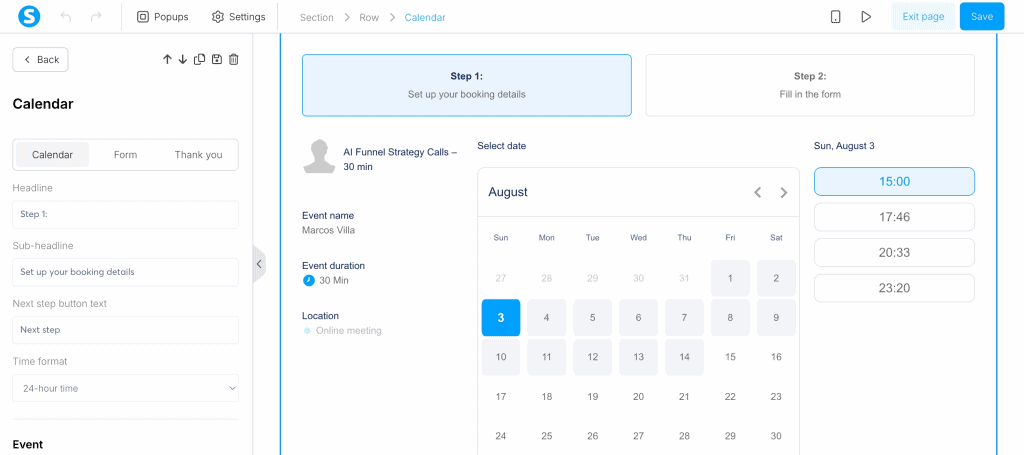
Systeme.io remains active in 2026. It is one of the rare platforms in this category whose price actually dropped rather than rose. Its Startup plan moved from $27 to $17 a month. It bundles a landing page builder, email marketing, course hosting, and sales funnels into one dashboard with no transaction fees on any plan.
The tradeoff: the interface trades some polish for its price, and a team used to a more refined builder will notice. It also connects to the same ad platforms and CRMs a lean team already runs, so switching in does not mean rebuilding every integration from scratch.
ActiveCampaign, for a team that prioritizes email and AI-driven automation
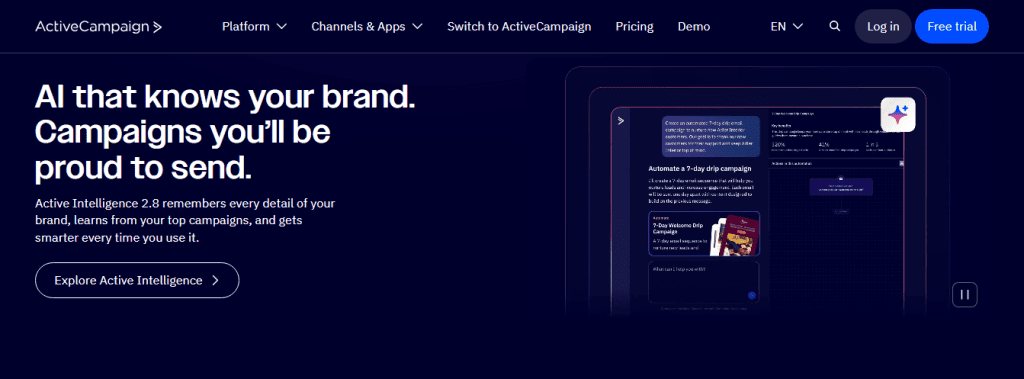
ActiveCampaign has evolved into what it calls an “Active Intelligence” hub. A generative content assistant is available starting on its Plus tier, with predictive send-time optimization starting one tier up on Pro. Email deliverability and automation depth remain its strongest fit, the reason it keeps showing up on shortlists built around list health rather than funnel breadth.
Its automation builder also connects to the CRMs and ad platforms a marketing team already runs, so the AI layer sits on top of workflows a team already has, not a rebuild. The limitation: the entry Starter plan sees none of this, and the send-time optimization specifically needs Pro, not just Plus.
GoHighLevel, for an agency managing multiple client accounts
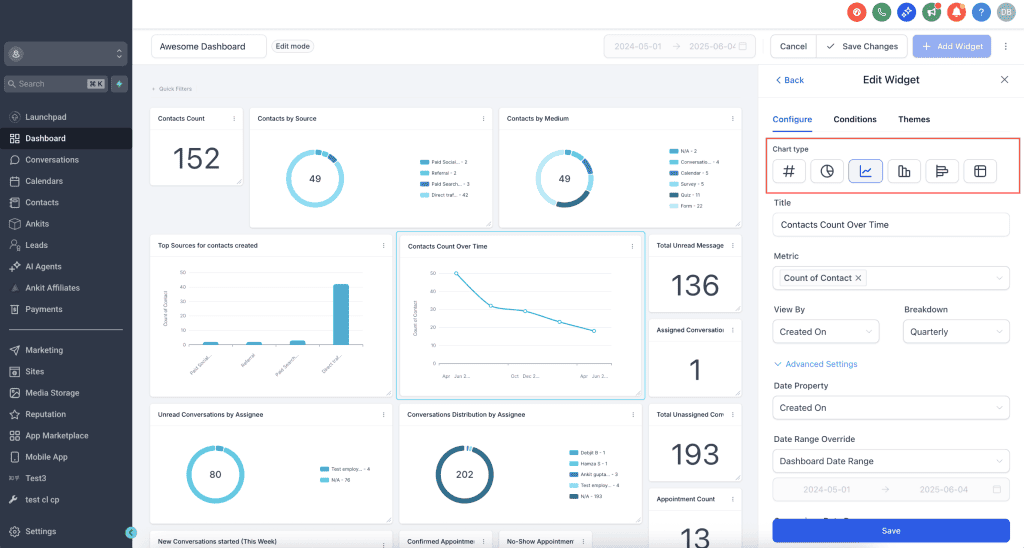
GoHighLevel’s base pricing held steady at its familiar three tiers in 2026. Its newer AI tools, including an AI Employee and Voice AI, now sit behind a separate paid add-on rather than bundled into the base price. It remains the strongest fit for an agency running white-labeled accounts across multiple clients, since the whole platform is built to be resold under the agency’s own brand rather than used directly by one company.
The limitation: the total cost climbs quickly once those AI add-ons are included, worth confirming before you quote a client.
GetResponse, for an e-commerce business
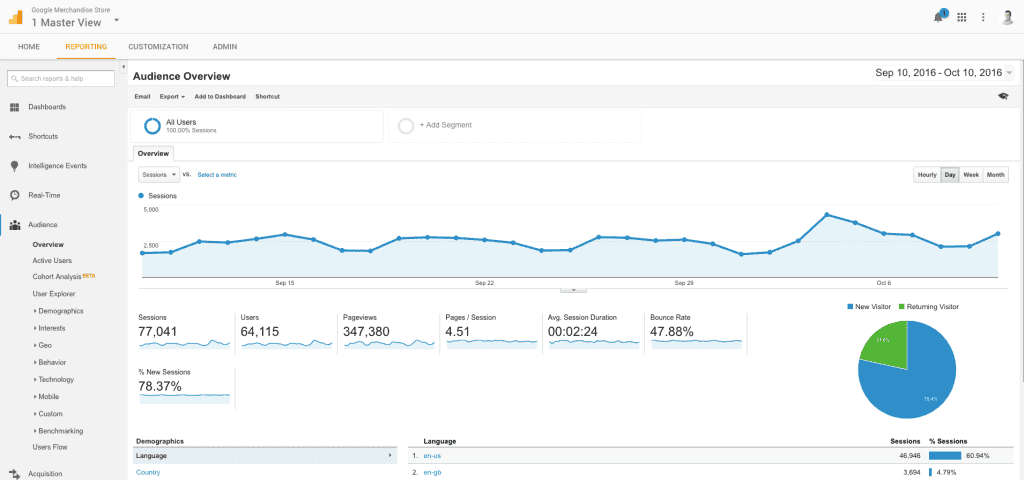
GetResponse expanded its AI content and campaign generation tools in 2026, including AI-assisted subject lines and full campaign drafts. Its e-commerce automation, cart recovery, and behavior-based journeys remain a strong fit for online sellers, since the automation triggers are built around storefront events rather than generic form fills.
The limitation: the entry Starter tier caps AI generator usage at 3 uses each. Unlimited access is reserved for higher tiers.
HubSpot, and the 2026 pricing change you should know about first
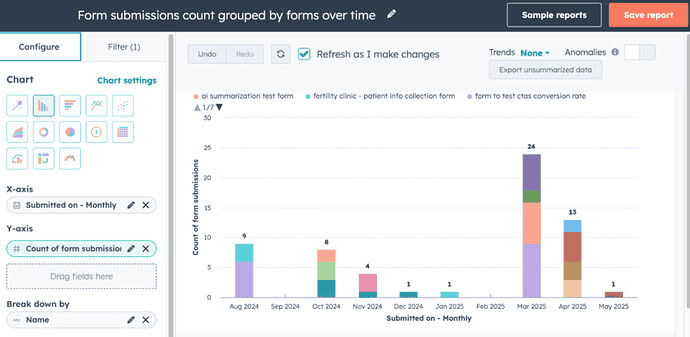
HubSpot is worth naming plainly before you buy it. In January 2026 it eliminated its per-hub discount system in favor of a single Starter Customer Platform bundle priced per seat. Then in April 2026 it moved its Breeze AI features to an outcome-based pricing model, billing per resolved outcome instead of per attempt.
That is a fact to watch, not a reason to avoid the platform. A team evaluating HubSpot right now should confirm current bundle pricing directly with a rep before budgeting against last year’s numbers.
Kartra, for a small to mid-sized business that wants everything under one roof
Kartra remains active in 2026 with a four-tier pricing structure. It runs periodic time-limited promotions on its higher tiers. It bundles funnels, membership sites, and helpdesk tools alongside its marketing features, a genuinely broad “everything included” fit for a team that wants customer support tickets in the same dashboard as its email campaigns.
The limitation: that breadth comes with a steeper learning curve than the leaner picks on this list.
Builderall, for an entrepreneur who wants funnel-building depth on a budget
Builderall remains active in 2026, rebuilt as Builderall 5.0 with a reported 100,000-plus active subscribers. Its funnel and page-building depth at its price point is the standout, covering a range of page types most budget-tier competitors charge extra for.
The limitation: the platform’s breadth of features has historically come with a steeper setup curve. That reputation has not fully caught up with the 5.0 rebuild yet.
Kajabi, and the January 2026 price hike course creators should know about
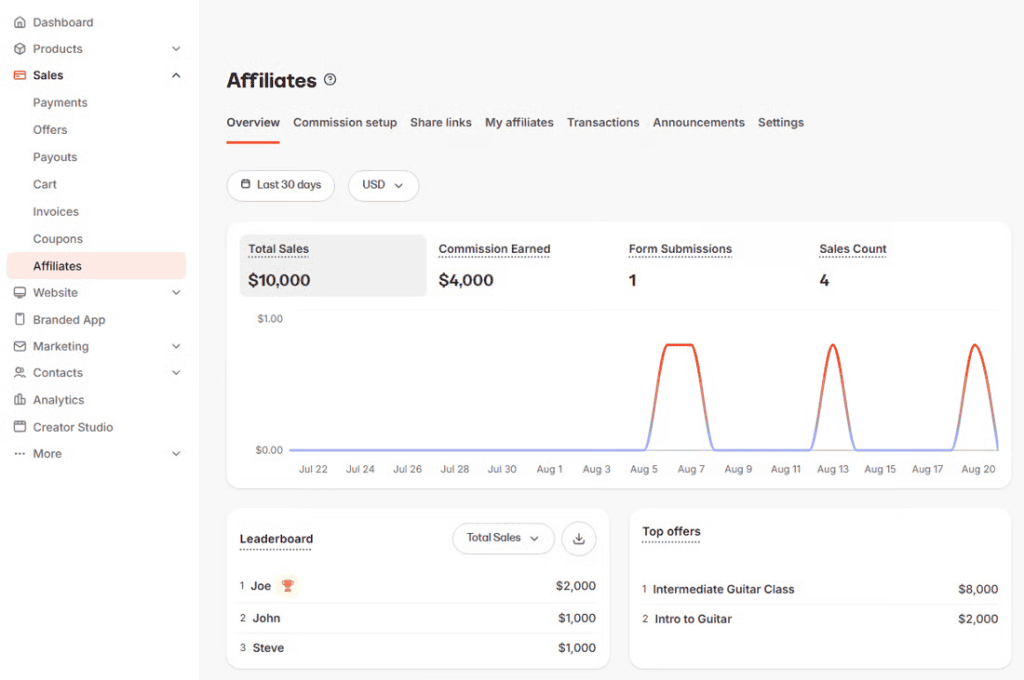
Kajabi is worth naming plainly too. In January 2026, Kajabi raised prices roughly 20 to 25 percent across every plan and eliminated its $89 Kickstarter tier entirely, its biggest pricing shift in years. It remains a strong fit for educators and coaches who want course hosting, community, and marketing in one platform.
A team evaluating Kajabi right now should budget against the new 2026 tiers, not older published pricing still circulating in older reviews.
Which all-in-one platform actually fits your business?
The right platform is a match to your actual business model, not the one with the most features. A course creator, a solo founder, an agency, and an e-commerce business each need a different one of the 8 platforms above.
Matching correctly is what actually gets your team running daily work inside it.
- A course creator or coach: Kajabi or Kartra, both built around course hosting, community, and marketing in one place.
- A solo founder or small business on a tight budget: Systeme.io or Builderall, both priced for a lean start.
- An agency managing multiple client accounts: GoHighLevel, built for white-labeled, multi-client management.
- An e-commerce business: GetResponse, for its cart-recovery and behavior-based automation.
- A small marketing and sales team: HubSpot, for its CRM depth, confirmed against its new 2026 bundle pricing.
- A team that leads with email: ActiveCampaign, for its deliverability and AI-driven send optimization.
Feature count is the wrong first filter. The right filter is which 2 to 3 functions your team will actually run daily inside the platform, starting with the one workflow you are trying to stop patching with outside tools.
Most teams working through this decision are also mid-evaluation on KPI software or marketing attribution software. The same daily-functions test applies to both.
How do you know your marketing platform is actually working?
A spreadsheet or a side tool still doing the job the platform was bought to replace is the tell that consolidation has not actually happened. It has just added a subscription. The honest test is which login your team opens first on a Monday morning, not which one appears on the org chart as the system of record.
Budget for this decision is not unlimited even at well-funded companies. Gartner’s 2026 CMO Spend Survey, covering 401 CMOs and marketing leaders, found that marketing budgets averaged 7.8 percent of total revenue. A platform earning its keep matters more than adding another one on top of it. Every new subscription competes with the same fixed pool of budget the last one came from.
Scott Brinker, founder of chiefmartec.com, put it plainly:
The landscape is a river, not a lake.
Scott Brinker, Founder, chiefmartec.com
A platform choice is not a one-time decision. The category keeps moving underneath you, the same discipline that caught Kajabi’s and HubSpot’s 2026 changes above. (Source: CMSWire, State of Martech 2026)
Where do you start with your own marketing platform decision?
Pick the platform that matches the 2 to 3 functions your team actually runs daily, not the one with the most features on the page. Then confirm current pricing directly before you commit, since two of the eight picks above changed this year alone.
That same discipline, score honestly before you fix anything, is what Rate My Funnel applies to your whole customer journey.
Score your funnel honestly before you add another platform
Frequently Asked Questions
What is the best all-in-one marketing platform?
It depends on your business model. A course creator or coach fits Kajabi or Kartra, a solo founder on a budget fits Systeme.io or Builderall, an agency fits GoHighLevel, an e-commerce business fits GetResponse, a small marketing and sales team fits HubSpot, and a team that leads with email fits ActiveCampaign. Match the platform to which 2 to 3 functions your team runs daily.
Is there a free all-in-one marketing platform worth using?
Systeme.io offers a genuine free plan covering up to 2,000 contacts, unlimited emails, sales funnels, and a custom domain, not just a demo. Most of the other 7 platforms in this comparison offer a free trial rather than a permanent free tier.
What changed with Kajabi’s pricing in 2026?
In January 2026, Kajabi raised prices roughly 20 to 25 percent across every plan and eliminated its $89 Kickstarter tier entirely, its first major pricing restructure in nearly a decade. Existing customers moved to the new pricing on their first billing date on or after January 13, 2026.
What changed with HubSpot’s pricing in 2026?
In January 2026, HubSpot eliminated its per-hub discount system in favor of a single Starter Customer Platform bundle priced per seat. In April 2026, it moved its Breeze AI features to an outcome-based pricing model, billing per resolved outcome instead of per attempt.
How long does it take to migrate to a new marketing platform?
There’s no universal timeline, but a full migration, contacts, automations, funnels, and integrations, typically takes several weeks for a small team and longer for one with complex automations. Budget more time than the platform’s own onboarding materials suggest, since most delays come from cleaning up data before the move, not the move itself.
Do I need a developer to set up an all-in-one marketing platform?
No for most of the 8 platforms compared here, they’re built for a marketer to configure directly. HubSpot and GoHighLevel are the exceptions once you push into deep custom integrations or white-labeled agency setups, where technical support genuinely helps.
About the author
Brian helps B2B founders install marketing + automation engines powered by Co-Thinking with AI. With 15+ years building predictable revenue systems, he's worked with SaaS, agency, and service businesses on 90-day done-with-you growth accelerators.
Ready to see your real growth gap?
Two minutes in the Growth Gap Scan and you walk away knowing the one thing capping your pipeline. Free, no obligation.