Proven B2B SaaS Content Strategy to Drive Demos & Sales

Founder, Grow Predictably · 15+ yrs building B2B revenue systems

TL;DR: B2B SaaS content fails when it’s built for rankings instead of the buyer journey. Map every piece to a stage in the Customer Value Journey, measure with a Growth Scorecard, and content starts driving demos instead of impressions.
Key Takeaways:
- Aligning your content strategy with the SaaS buyer journey can significantly improve engagement, leading to higher conversion rates and shortened sales cycles.
- Mapping content to the customer value journey helps identify key touchpoints, ensuring your content addresses customer needs at every stage and accelerates sales.
- Tracking key metrics and KPIs with a Growth Scorecard allows B2B SaaS founders to optimize performance effectively and make data-driven decisions.
- Prioritizing content formats such as video and interactive content tend to lift engagement noticeably, making them useful for demo generation.
- Crafting educational content that addresses common pain points not only generates qualified leads but can also meaningfully shorten the sales cycle.
- Avoid common pitfalls like neglecting audience segmentation, which can lead to ineffective content strategies and missed opportunities for engagement.
“Basically, content marketing is the art of communicating with your customers and prospects without selling.”
— Joe Pulizzi, founder of the Content Marketing Institute
A B2B SaaS content strategy is essential for driving demos and shortening sales cycles by aligning your messaging with your audience’s needs. Over the years, I’ve honed my approach to content marketing, transforming it into a powerful tool that not only attracts potential customers but also guides them through the buying process.
I’ve found that a well-defined content strategy can meaningfully shorten sales cycles, which is exactly why it is so crucial to develop a content plan that truly resonates with your target market.
In this article, I will walk you through my proven B2B SaaS content strategy framework, share insights on mapping content to the customer value journey, and highlight the metrics I track to optimize performance. I’ll also get into common pitfalls in B2B SaaS content strategy and how to avoid them, ensuring you have a roadmap for success.
Whether you’re a seasoned founder or just starting out, my insights will provide you with actionable steps to enhance your content marketing efforts and drive tangible results.
My Proven B2B SaaS Content Strategy Framework
A successful B2B SaaS content strategy isn’t about publishing more. It’s about publishing smarter by aligning every piece of content with your buyer journey to accelerate demos and shorten sales cycles. I’ve spent years refining a framework that transforms content from a brand awareness play into a revenue engine, and I’m sharing the core principles here.
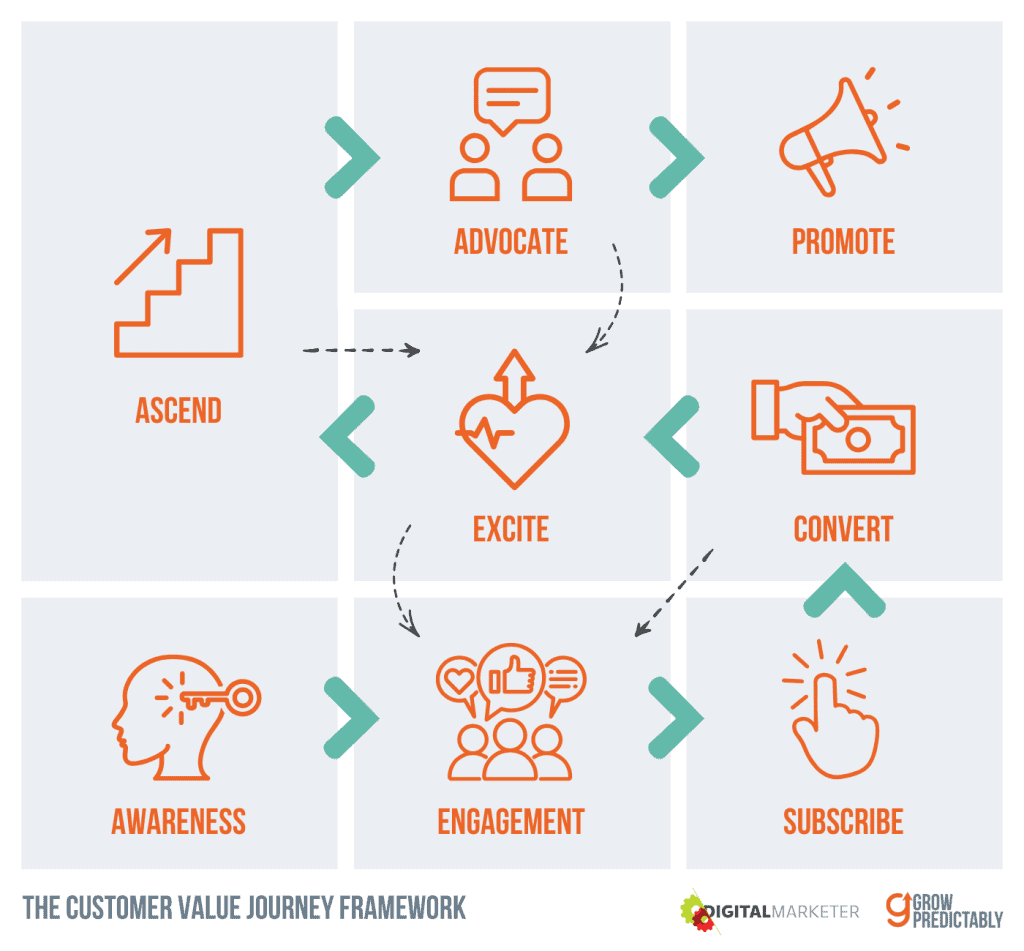
My approach centers on mapping content to the Customer Value Journey, an eight-stage framework that guides prospects from initial awareness through loyal advocacy. This isn’t theoretical. When I work with SaaS founders, we systematically identify where prospects stall (usually between “Engage” and “Convert”) and deploy targeted content formats to move them forward.
For example, according to SEOProfy, SaaS companies that publish original research see a 20.9% improvement in Google top-10 rankings. That’s proof that strategic content planning pays off.
The second pillar is measurement. I use the Growth Scorecard to track SaaS-specific metrics and KPIs that actually matter: demo conversion rate, sales cycle length, customer acquisition cost, and lifetime value. Most founders track vanity metrics like page views.
I track bottlenecks. If your content generates 10,000 visitors but zero qualified demos, you don’t have a traffic problem. You have a content marketing strategy problem. The Growth Scorecard helps pinpoint exactly where prospects drop off so you can fix it.
Content formats and channels must align with your target audience’s behavior. I’ve seen technical founders waste months on SEO-heavy blogs when their buyers live on LinkedIn. Start where your audience already pays attention. For B2B SaaS, that’s usually thought leadership posts, case studies, and use cases.
In fact, 83% of SaaS companies produce use case stories, and for good reason. They demonstrate ROI in the buyer’s language, not yours.
Here’s what this framework delivers in practice:
- Shorter sales cycles: By educating prospects before the first sales call, you eliminate 2-3 discovery meetings. Content does the heavy lifting.
- Higher demo quality: Strategic lead generation content (like comparison guides and ROI calculators) pre-qualifies prospects. You spend time with buyers who understand your value.
- Improved customer retention: Post-purchase content (onboarding guides, best practice playbooks) reduces churn by reinforcing the decision and accelerating time-to-value.
- Scalable growth: Once you identify what works, you can systematically repurpose content across channels without starting from scratch each time.
I’ve applied this framework with SaaS clients facing high churn and long sales cycles. One client had strong traffic but weak demo conversion. We mapped their content to the buyer journey, identified a gap in the “Subscribe” stage (no email nurture sequence), and built a five-email series addressing common objections.
Demo requests climbed over the following weeks. Another client struggled with undefined metrics. We implemented the Growth Scorecard, discovered their Facebook ads were generating unqualified leads, and shifted budget to LinkedIn, which brought their acquisition cost down.
The difference between content that drives revenue and content that just exists is intentionality. Every blog post, every case study, every LinkedIn update should map to a stage in your buyer journey and move a specific metric. If it doesn’t, it’s noise.
This isn’t about creating more content. It’s about creating the right content, in the right format, for the right stage of the journey, and then measuring relentlessly to optimize. That’s how you turn content into a predictable demo and sales engine.
Why Should You Align Your Content Strategy With the SaaS Buyer Journey?
Aligning your content strategy with the buyer journey ensures your prospects receive the right information at exactly the moment they need it to move closer to booking a demo. Without this alignment, you’re essentially throwing content into the void and hoping something sticks, a recipe for wasted effort and painfully long sales cycles.
Understanding the SaaS Buyer Journey Stages
I break down the buyer journey into eight distinct stages through what I call the Customer Value Journey framework: Awareness, Engagement, Subscribe, Convert, Excite, Ascend, Advocate, and Promote. Each stage represents a specific mindset and set of questions your prospect is asking.
In the Awareness stage, prospects don’t even know they have a problem yet. They’re not searching for your solution. They’re experiencing symptoms. At Engagement, they’re starting to recognize the problem and exploring potential approaches. By Subscribe, they’re evaluating specific solutions and building a consideration set.
The Convert stage is where demo requests happen, but only if you’ve properly educated them through the earlier stages. According to Your Content Mart, 97% of B2B marketers now have a content strategy in place, but a strategy only drives demos when it maps directly to these journey stages.
I’ve seen too many SaaS founders jump straight to conversion-focused content without building the foundation. They create demo request pages and case studies but skip the educational content that helps prospects understand why they need a solution in the first place. That’s like proposing marriage on a first date.
How Content Influences Each Stage
Each stage of the buyer journey demands different content formats and messaging approaches.
- Awareness – You need thought leadership content that frames problems in new ways: blog posts about industry trends, original research, or contrarian perspectives that make prospects stop and think.
- Engagement – Your content should diagnose their specific situation. I use interactive tools, assessments, and diagnostic frameworks here. My Growth Scorecard, for example, helps prospects identify exactly where their marketing funnel is breaking down before they ever talk to me.
- Subscribe – Prospects want proof and specificity. Case studies showing measurable outcomes work exceptionally well here. According to Position Digital, 83% of SaaS companies use customer success stories, with 82% following the Challenge/Solution/Results structure.
The key insight: content isn’t just about generating traffic or brand awareness. It’s about systematically moving prospects through a psychological journey from “I don’t have a problem” to “I need to solve this now, and you’re the right partner.”
When I work with clients on their content marketing strategy, we map every piece of content to a specific stage. A blog post about “common SaaS marketing mistakes” targets Awareness. A comparison guide of marketing automation platforms targets Subscribe. A demo video showing the product in action targets Convert.
This approach also enables smart content repurposing. A single client case study can be broken into an awareness-stage blog post (“How Company X Reduced Churn”), an engagement-stage diagnostic (“Calculate Your Potential Churn Reduction”), and a conversion-stage video testimonial.
The Risk of Ignoring Customer Journey Alignment
When you ignore buyer journey alignment, you end up with what I call the “leaky bucket” problem. You pour resources into lead generation at the top of the funnel, but prospects drop off at every stage because they’re not getting the information they need to progress.
I’ve seen this play out dozens of times. A SaaS founder invests heavily in SEO and drives thousands of visitors to their blog. Traffic looks great in the dashboard. But demo requests stay flat because all their content lives in the Awareness stage. There’s no bridge content helping prospects move from “interesting problem” to “I need to evaluate solutions.”
The sales cycle stretches out because prospects aren’t being educated systematically. They book demos before they understand the problem fully, leading to misaligned conversations and low conversion rates. Or worse, they disappear into competitor evaluation processes because you haven’t given them the comparison frameworks they need.
According to Ranklyx, strategic content efforts can significantly cut customer acquisition costs. But that only happens when content is mapped to the actual journey prospects take, not just randomly published based on what competitors are writing.
I track this with my Growth Scorecard framework. We measure conversion rates between each journey stage to identify exactly where the funnel breaks down. Is it Awareness to Engagement? That signals a content relevance problem. Engagement to Subscribe? You need better nurture sequences and diagnostic content.
The alternative, creating content without journey alignment, means you’re essentially gambling. You might accidentally create something that resonates at the right stage, but you have no systematic way to replicate success or diagnose failure. Your metrics and KPIs become meaningless because you can’t connect content performance to business outcomes.
Understanding B2B buyer psychology has taught me that people don’t make decisions linearly. They loop back, they research in bursts, they disappear for weeks. But when your content strategy maps to their journey, you’re there with the right answer whenever they’re ready for the next step. That’s how you turn content from a cost center into a predictable demo-generation engine.
How Do I Map Content to the Customer Value Journey to Accelerate Sales?
Mapping content to the Customer Value Journey isn’t about creating more content. It’s about creating the right content that moves prospects from awareness to decision with minimal friction. I’ve seen too many SaaS founders publish blog posts that generate traffic but never convert to demos. The solution is strategic alignment between what you publish and where your prospect sits in their buying journey.
Step 1: Identify Customer Avatars and Pain Points
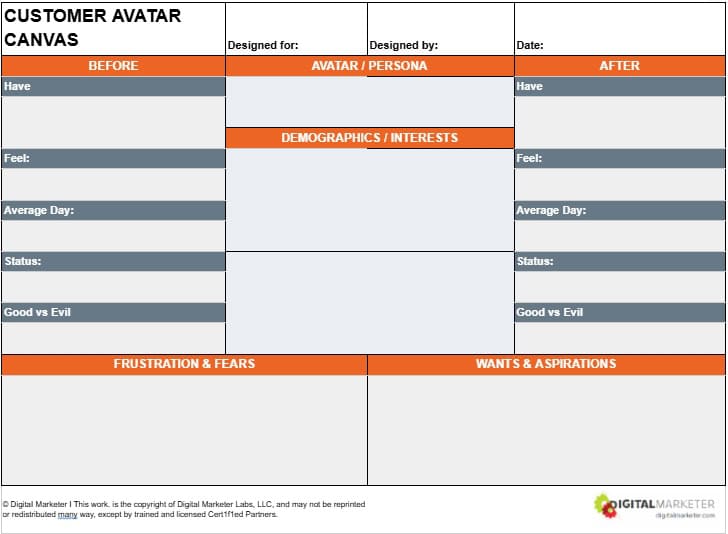
I start every content strategy by profiling detailed customer avatars. Not surface-level demographics. I’m talking about understanding their frustrations, goals, and the emotional drivers behind their buying decisions.
A customer avatar canvas is a one-page, structured profile of your ideal customer that captures demographics, behaviors, goals, pain points, motivations, buying triggers, and common objections. It makes the target customer tangible for product, marketing, and sales teams so messaging, channel choices, and offers can be precisely aligned. Teams use it to prioritize outreach, craft tailored content/offers, and iteratively refine assumptions with real customer data.
In my experience, B2B buyers don’t purchase SaaS products because of features. They buy because they’re afraid of falling behind, frustrated with inefficiency, or desperate to prove ROI to their leadership. When I worked with a client struggling to convert traffic, we discovered their content spoke to IT teams when their actual buyers were marketing directors worried about attribution.
Use a Customer Avatar Canvas to map:
- Primary pain points (What keeps them up at night?)
- Goals and desired outcomes (What does success look like?)
- Buying triggers (What event pushes them to search for a solution?)
- Decision criteria (What metrics matter most to their business?)
This isn’t guesswork. Pull data from customer feedback, sales call recordings, and support tickets. A content strategy only works if it’s built on real buyer insights, not assumptions.
Step 2: Match Content Types to Journey Stages
Each stage of the buyer journey requires specific content types. I map content formats directly to the eight stages of the Customer Value Journey framework I use with clients:
Awareness Stage (Prospect doesn’t know you exist):
- Educational blog posts addressing pain points
- SEO-optimized guides and how-to articles
- Social media content and thought leadership posts
Engagement Stage (Prospect is evaluating options):
- Comparison guides and product category explainers
- Webinars and live demos
- Case studies showing real customer outcomes
Conversion Stage (Prospect is ready to decide):
- Product demos and free trials
- ROI calculators and pricing transparency
- Customer testimonials and success stories
According to Position Digital, 83% of SaaS companies produce use case stories, while 82% use the Challenge/Solution/Results structure. These formats work because they address buyer psychology. Prospects need proof that your solution works for someone like them.
I’ve found that B2B SaaS websites that offer original research tend to have 29.7% higher organic traffic than those that don’t. This isn’t just about SEO. It’s about establishing authority that shortens the sales cycle.
For more on structuring your content calendar around these stages, check out my guide on developing a content calendar for B2B SaaS.
Step 3: Use Content Personalization to Deepen Engagement
Content personalization is what transforms generic traffic into qualified demos. I’m not talking about inserting someone’s first name into an email. I mean delivering content that speaks directly to their industry, role, and stage in the buying process.
When I optimize funnels for clients, I segment content by:
- Industry vertical (SaaS for healthcare vs. SaaS for e-commerce)
- Company size (startup vs. enterprise)
- Role (founder vs. marketing director vs. product manager)
For example, a founder cares about ROI and scalability. A marketing director cares about attribution and campaign performance. If your content doesn’t speak to their specific concerns, they’ll bounce.
I use dynamic content blocks on landing pages, personalized email sequences based on behavior, and role-specific CTAs. According to strategic content efforts, this approach can cut customer acquisition cost significantly when done right.
Learn more about how to apply this in my article on personalization in B2B marketing.
Step 4: Plan Content Formats and Distribution Channels
The best content in the world won’t drive demos if nobody sees it. I prioritize content distribution across scalable channels that align with where my target audience actually spends time.
Here’s how I think about content formats and channels:
Owned Channels (You control the distribution):
- Blog posts optimized for SEO and lead generation
- Email newsletters with segmented audience lists
- YouTube videos and podcasts for long-form education
Earned Channels (Third-party validation):
- Guest posts on industry publications
- Podcast interviews and webinars
- PR and media coverage
Paid Channels (Amplify reach quickly):
- LinkedIn ads targeting decision-makers
- Google Search ads for high-intent keywords
- Retargeting campaigns for engaged visitors
I’ve seen clients waste budget on channels that don’t match their audience. If your buyers are technical founders, they’re likely on Twitter and Hacker News, not Facebook. If they’re enterprise buyers, LinkedIn and industry conferences are where you’ll find them.
Where in the Web Are Your B2B SaaS Ideal Customer Avatars?
Your most common ideal customers in the B2B SaaS space are in different places in the internet. To get rid of the confusion, here are your big three:
1. LinkedIn
Who uses it: Recruiters, job seekers, sales professionals, B2B marketers, and senior decision-makers.
Professional Usage: Most B2B buyers review LinkedIn profiles before accepting a meeting. It is used for talent acquisition, personal branding, and thought leadership.
2. X (Formerly Twitter)
Who uses it: Journalists, public relations specialists, tech professionals, writers, politicians, and healthcare professionals.
Professional Usage: Journalists widely treat X as a valuable tool. It is heavily used for crisis communication, brand promotion, and following breaking industry trends.
3. Facebook
Who uses it: Small business owners, B2C marketers, social media managers, and public figures.
Professional Usage: Used for social customer service, targeted advertising at scale, and building local community engagement through Groups.
For a deeper dive into choosing the right channels, read my guide on B2B SaaS content marketing.
The key to accelerating sales isn’t just publishing more. It’s publishing strategically, with content that aligns to each stage of the journey, speaks directly to buyer pain points, and distributes through channels that actually reach your audience. When you map content this way, you turn your marketing from a cost center into a predictable revenue engine.
What Metrics and KPIs Do I Track Using the Growth Scorecard to Optimize Performance?
I track 3-5 high-signal metrics and KPIs per journey stage using the Growth Scorecard to identify bottlenecks fast. This manual weekly tracking approach keeps me focused on actionable data that directly impacts demo conversion, lead quality, and sales cycle length, not vanity metrics like page views or social media likes that feel good but don’t move revenue.
Selecting SaaS-Specific Metrics for Each Journey Stage
The Growth Scorecard framework forces me to choose metrics that reflect real customer movement through the buyer journey.
| Stage | Metrics & Notes |
|---|---|
| Awareness | At the awareness stage, I track organic traffic growth and target audience engagement rates, not total impressions. |
| Consideration | During consideration, I measure content engagement depth (time on page, scroll depth) and lead quality scores based on firmographic fit. |
| Decision | For decision-stage content, I focus obsessively on demo request conversion rates and lead-to-qualified-opportunity ratios. According to Position Digital, 83% of SaaS companies use case studies structured around customer challenges and results. I track how these case studies specifically influence demo bookings by tagging UTM parameters and monitoring content assist metrics in our CRM. |
| Post-purchase | Post-purchase, I track customer retention rates, feature adoption velocity, and expansion revenue per account. These backend metrics tell me if my content is actually creating successful customers or just filling the top of a leaky bucket. |
| Example outcome | When I worked with a client struggling with high annual churn, we discovered their onboarding content was missing critical use-case examples, and fixing that single gap measurably improved 90-day retention. |
⮞ What is the best way to align content with the SaaS buyer’s journey?
Start with the buyer’s actual questions and decisions at each stage, then map content, KPI, and CTA to the decision you want them to make next.
1. Audit and map: list every buyer stage (Awareness, Consideration, Decision, Post-purchase) and the real questions buyers ask at each. Use customer interviews and support logs to validate assumptions.
2. Define the job for each piece: decide whether content should educate, diagnose, prove, or convert. Don’t mix jobs in one asset.
3. Match formats to stage: thought leadership and trend posts for Awareness; long-form guides, interactive assessments, and comparison pieces for Consideration; case studies, ROI calculators, and demos for Decision; onboarding playbooks and feature deep dives for Post-purchase.
4. Assign KPIs and cadence: pick 1-3 high-signal metrics per stage (e.g., target-audience organic growth, content engagement depth, demo conversion, 90-day retention) and review weekly or biweekly.
5. Create handoffs and triggers: design the CTA that moves them to the next stage (e.g., assessment → demo request) and ensure sales/CS receives tagged leads.
6. Repurpose deliberately: plan how a case study will generate awareness, drive engagement, and support conversion through derivative assets.
7. Govern and iterate: set owner, test, measure lift, and update personas and messaging every quarter.
⮞ How can I use content to shorten my SaaS sales cycle?
Start by removing ambiguity at every decision point so prospects can say “yes” faster. Build decision-stage assets that answer procurement, implementation, and ROI questions upfront. Use succinct, evidence-based content (one-pagers, ROI calculators, and short demo clips) that sales can send to move deals forward.
Create diagnostic content that qualifies leads before they hit sales: assessments, checklists, and product fit quizzes reduce back-and-forth discovery. Train reps with battlecards and templated sequences that reference specific assets for common objections.
Use content to accelerate trust: documented case results with clear timelines and metrics eliminate doubt. Instrument content links with UTM/CRM tags so you know which assets correlate with faster closes and double down on those.
Offer low-friction trial experiences and send contextual help content during the trial to reduce time-to-value. Finally, run time-boxed nurture campaigns that combine proof points and urgency (limited onboarding slots, pilot windows) to nudge decision-makers who are ready but inattentive.
⮞ Which content channels are most effective for B2B SaaS founders?
Choose channels where your buyers learn, validate, and compare tools. Prioritize channels that match buyer intent and let you distribute relevant decision-stage content quickly.
1. LinkedIn: top channel for founders and execs. Use short thought leadership posts, founder POVs, and case-study threads to build authority and generate demo leads.
2. Email / Newsletter: highest ROI for nurturing and time-boxed offers. Use segmented sequences with decision-stage assets for qualified leads.
3. Product Hunt & Hacker News: great for early-stage product launches and authentic feedback from builders and early adopters.
4. YouTube / Short video: demos, explainer clips, and customer testimonials work well for consideration and decision stages. Embed in sales sequences.
5. Twitter/X: fast trend engagement, founder voice, and link amplification. Useful for culture and topical hooks.
6. Niche communities (Slack, Discord, Reddit): ideal for deep conversations, beta recruits, and product-market fit validation.
7. SEO / Blog: essential for scalable Awareness and Consideration. Prioritize high-intent comparison and how-to content that surfaces when buyers research.
8. Webinars & Live Demos: convert high-intent prospects with interactive Q&A and direct CTAs to book a demo.
⮞ How do I measure the ROI of my content marketing efforts?
Measure ROI by connecting content-driven activity to revenue and customer value. Start with clear goals and choose a primary business metric like demo-to-opportunity rate, SQLs generated, or expansion revenue.
Track attribution: use first-touch for awareness value, last-touch for conversion attribution, and multi-touch models for a fuller picture. Instrument UTM tags, content assist tracking in your CRM, and conversion events that feed into revenue records.
Calculate cost per outcome by dividing content spend (production + distribution + tools + people time) by the number of qualified outcomes (demos, SQLs, closed deals). Layer in LTV and churn impact: if content improves retention or expansion, attribute uplift across cohorts and include the increased LTV in ROI.
Run short experiments: A/B different content pieces or CTAs and measure lift in demo conversion and deal velocity. Finally, run cohort analyses and report on time-lag effects. Content often drives revenue with a delay, so look at 30-90 day windows and adjust expectations accordingly.
Turn B2B SaaS Content to Predictable Demos
Start small: run a 30-day audit to identify the one stage losing the most prospects, then create one high-impact piece (a case study, ROI calculator, or nurture sequence) aimed at that stage. Track demo requests and stage-to-stage conversion in your Growth Scorecard; iterate weekly based on results.
Keep it practical: document customer avatars, tag content with journey-stage UTMs, and prioritize experiments that move demo-booking metrics. Drop vanity metrics that don’t affect pipeline and align one KPI to each content piece.
If you want help, I can share a content audit template and a Growth Scorecard worksheet your team can use to get immediate clarity, or run a short workshop to map your top ten assets to the journey.
Action beats activity. Build fewer, better, more intentional pieces that do measurable work. Do that consistently and your sales cycles will shorten, demo quality will improve, and content will finally pull its weight as a revenue engine. Start one experiment this week; report results after 30 days. Small wins compound.
Don’t have a Growth Scorecard yet? The free Growth Gap Scan gives you your baseline in about two minutes, scoring your growth across four pillars (Attract, Convert, Ascend, Accelerate) and naming the one capping your pipeline.
If you’d like feedback on your plan, send your Growth Scorecard snapshot or top-performing posts and I’ll give recommendations. And if you want the production system behind this, the Tech Content Engine walks through building content at the constraint stage step by step.
About the author
Brian helps B2B founders install marketing + automation engines powered by Co-Thinking with AI. With 15+ years building predictable revenue systems, he's worked with SaaS, agency, and service businesses on 90-day done-with-you growth accelerators.
Ready to see your real growth gap?
Two minutes in the Growth Gap Scan and you walk away knowing the one thing capping your pipeline. Free, no obligation.