B2B Customer Journey Template: A Practical, Fillable Map

Founder, Grow Predictably · 15+ yrs building B2B revenue systems

TL;DR: Most B2B customer journey templates are single-buyer diagrams borrowed from B2C, and a real B2B decision now involves 13 internal stakeholders and 9 external participants on average. This piece gives a practical, fillable template built for that reality: a grid, not a straight line. Fill it out starting at the stage where deals currently stall, not stage one. That is where the map earns its keep fastest.
Key Takeaways
- Most customer journey templates fail for B2B because they model one buyer walking a straight line, a design borrowed from B2C that does not match how a real buying group moves.
- Forrester’s 2025 Buyers’ Journey Survey found an average of 13 internal stakeholders and 9 external participants influence a single B2B purchase decision. A template built for one buyer is already wrong before a field gets filled in.
- Gartner’s 2026 sales survey found 67 percent of B2B buyers prefer a rep-free experience. A useful template has to plan for content that answers questions with no rep in the room.
- The template itself is a grid: stage, buying-group role, their real question, self-serve or rep-assisted, and the content that actually answers it.
- Start with real input from sales and customer success, pulled from actual deal history. A template filled out by one person guessing at buyer behavior reproduces the exact mistake this piece diagnoses.
I built this template after watching the same pattern across marketing teams: a journey map gets built, it looks complete on a slide, and it still cannot explain why deals stall or where content is missing.
You have likely read journey-mapping content before and want something to actually fill out this week, not another explainer.
The work that follows treats the template the way a real buying committee actually behaves. Name who is really in the room at each stage, then build the map around them.
Why do most customer journey templates fail for B2B?
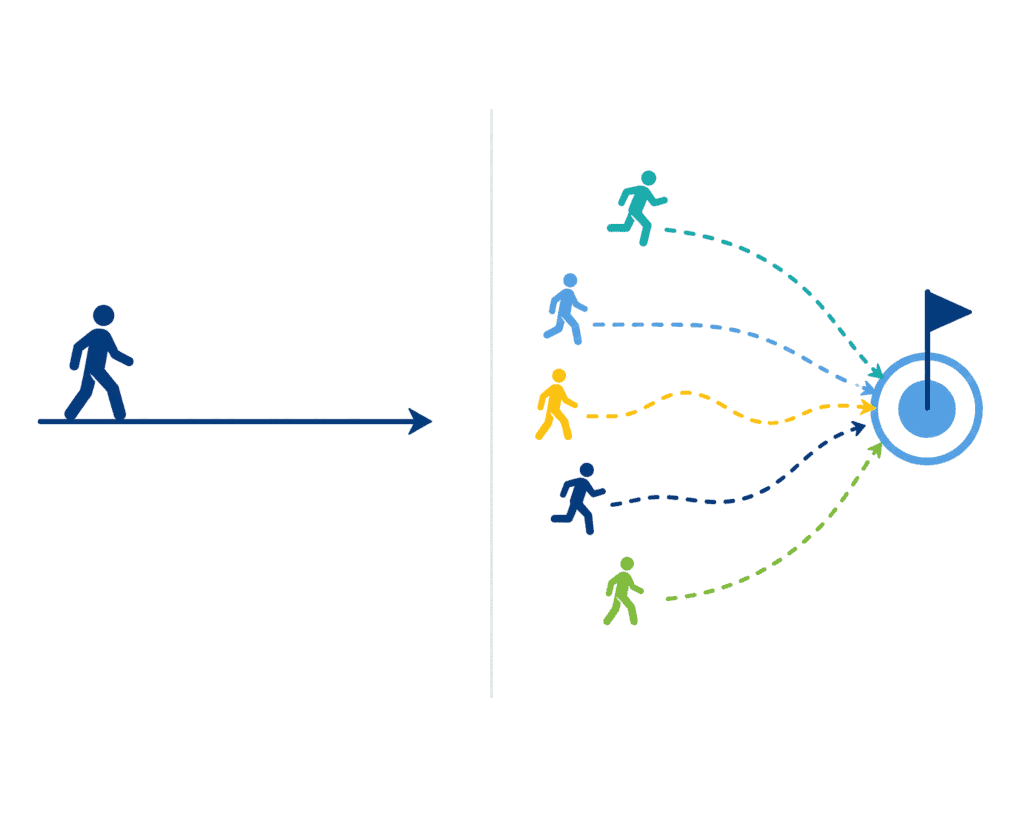
Most B2B customer journey templates fail because they force a single buyer through a straight line, a shape borrowed directly from B2C design.
A real B2B decision runs through a group of stakeholders who move at different speeds on different questions at the same time, and a straight-line template has no way to represent that.
You can spot the pattern in almost any filled-out template a marketing team produces:
- Awareness, consideration, decision, done
- Each stage gets one box and one buyer persona attached to it
- The map looks finished, gets presented once, then gets filed away
What it never explains is why a deal that reached “decision” six weeks ago still hasn’t closed. That’s because the map never asked who else needed to sign off.
Tony Zambito, founder of the buyer persona methodology, named the failure mode plainly:
“It is a mapping of all the internal processes taking place with a view of buyers having internal interactions with an organization.”
That’s the root cause in one sentence. Most templates map the seller’s internal process when they should map the buyer’s actual experience, and those are two different shapes entirely. A template built around internal stages will always look tidier than reality, since reality doesn’t organize itself around a sales team’s pipeline stages.
The common fix people reach for is adding more detail to the same single-buyer diagram:
- More touchpoints
- More content types
- A longer list of channels
None of that works. More detail on the wrong shape still produces the wrong shape; it just takes longer to fill out.
I’ve built this piece around the two variables most versions skip entirely: who is actually in the room at each stage, and how much of that stage happens without a salesperson present. Both get real 2026 numbers behind them next.
What does a real B2B customer journey template need to include?
A real B2B customer journey template needs to account for two things most versions ignore: the actual size of the buying group, and how much of the journey happens before anyone talks to a salesperson, if a salesperson gets involved at all.
On group size, the numbers are bigger than most templates assume. Forrester’s 2025 Buyers’ Journey Survey found an average of 13 internal stakeholders and 9 external participants influence a single B2B purchase decision, roughly 22 people touching one deal. That’s a wider circle than the core buying group the sibling pillar names.
A template that assumes one buyer isn’t simplified; it’s describing a different kind of purchase entirely.
On rep involvement, the numbers cut the other way. Gartner’s 2026 sales survey, covering 646 buyers surveyed in August and September 2025, found that 67 percent of B2B buyers favor a rep-free experience.
Alyssa Cruz, senior principal analyst in Gartner’s sales practice, put it plainly: B2B buyers are handling critical buying tasks in increasingly autonomous ways.
A template that plans every stage around a sales conversation already misses two-thirds of how the actual decision is made.
Put those two findings together, and the design requirement gets specific. I’d build the template around two columns most versions leave out entirely:
- A role column, since a single persona can’t represent 22 people
- A self-serve-versus-rep-assisted column, since most of the content answering a stakeholder’s question has to work with nobody from the vendor in the room
The actual template follows next.
What does the actual template look like?
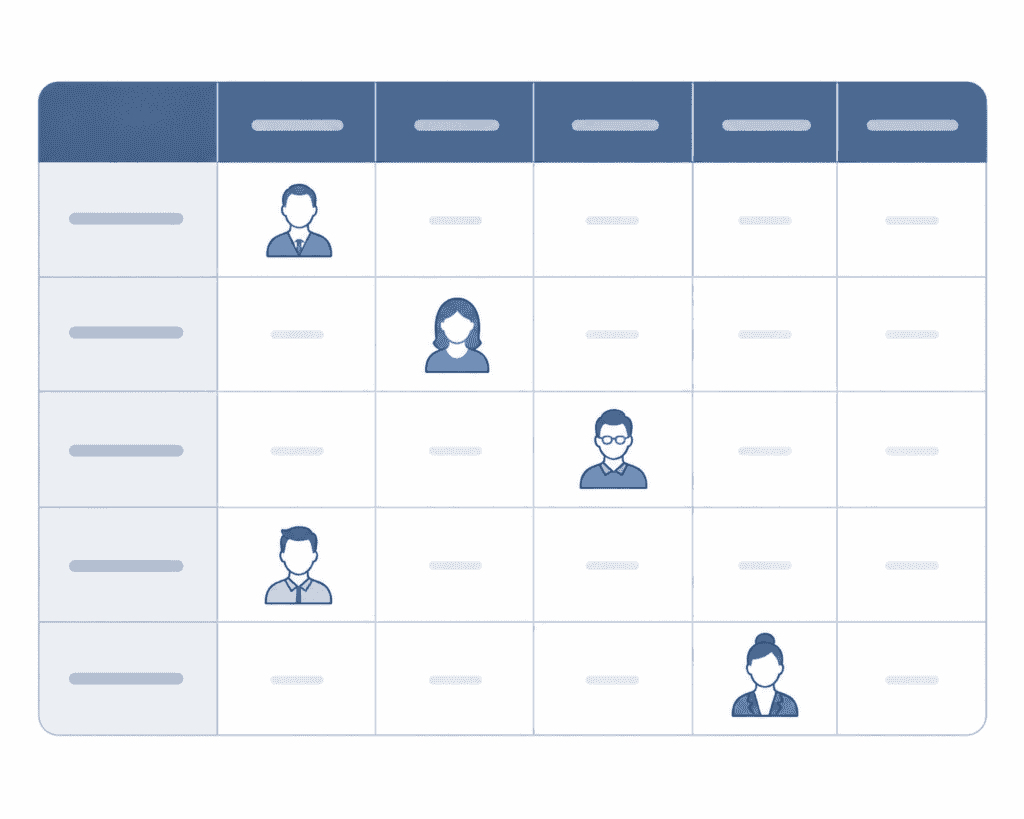
The template is a grid, not a diagram. Each row maps to one of the five stages the sibling pillar on this site defines in full: Awareness, Consideration, Decision, Onboarding, Advocacy. Each stage carries five fields, filled in for your own business.
Here are three filled-out example rows, followed by a blank row to copy:
| Stage | Buying-Group Role Present | Their Real Question | Self-Serve or Rep-Assisted | Content That Answers It |
|---|---|---|---|---|
| Consideration | Technical evaluator | Does this actually integrate with our stack? | Self-serve | (blank) |
| Consideration | Economic buyer | What does this cost at our scale? | Rep-assisted | Pricing page |
| Decision | Procurement | What is the contract and security review process? | Self-serve | (blank) |
- Stage: one of the five stages above.
- Buying-group role present: the specific roles from your own deal history that show up at this stage: economic buyer, technical evaluator, end user, procurement, legal. Name actual titles pulled from real deals rather than a generic list.
- Their real question: that role’s specific question at this stage, in their own words if sales notes or win-loss interviews have them.
- Self-serve or rep-assisted: whether this role typically answers that question alone or with a salesperson present. Default to self-serve unless you have specific evidence otherwise.
- Content that answers it: the page, document, or asset that currently answers the question, or a blank cell if nothing does yet.
Fill five rows minimum, one per stage, adding extra rows within a stage for each distinct role that shows up there. A deal with both a technical evaluator and an economic buyer active during Consideration earns two separate rows, as the example above shows.
The blank cells matter more than the filled ones. 6sense’s 2025 B2B Buyer Experience Report found that buyers select a favored vendor before engaging sellers, and that the pre-contact favorite wins the deal roughly 80 percent of the time.
Every content cell left blank at a self-serve stage is a specific, named reason a buyer’s pre-contact favorite might end up being a competitor.
How do you actually fill out the template?
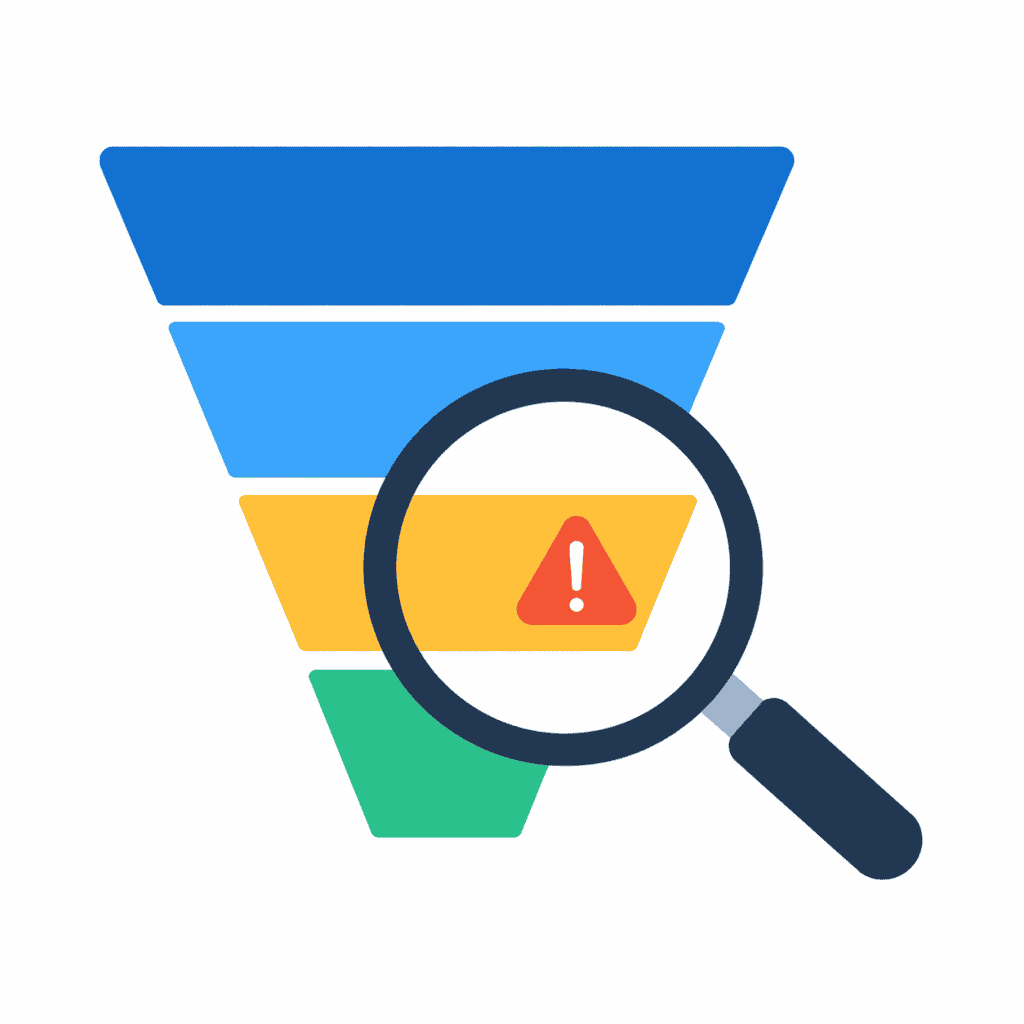
Start at your own stall stage, wherever deals currently go quiet, rather than at stage one. That’s where the map earns its keep fastest, since the evidence is still fresh in the sales team’s memory.
Pull the buying-group roles and real questions from actual deal history. Sit down with sales or customer success and ask what a specific recent deal actually looked like:
- Who got looped in
- What they asked
- Whether a rep answered it live or the buyer found the answer somewhere else first
When I run this exercise with a sales team, the first pass almost always surfaces a role nobody had written down anywhere. Usually it’s procurement or legal quietly deciding the deal at a stage marketing assumed only the economic buyer would touch. Three or four real deals produce a far more accurate row than one person’s guess.
6sense’s 2025 report also found that winning vendors averaged 16 interactions per buyer across the full journey, a useful check against the template once it’s filled in. A stage with one thin row next to a competitor’s stage with several logged interactions is a visible gap, not a guess.
Then check the self-serve-or-rep-assisted column against what actually happened. If Gartner’s 67 percent finding holds for your own funnel, most rows will default to self-serve, even at stages your sales team assumes are rep-led.
The honest limitation here is real: this takes input from sales and customer-facing teams. A template filled out by one person guessing at buyer behavior reproduces the exact single-buyer failure mode Zambito’s quote named earlier, just with more columns.
What does a B2B template need that a B2C template does not?
A B2B template needs a role column and a self-serve-or-rep-assisted column. A B2C template tracks one buyer, so neither field applies.
Most B2B templates borrow the B2C shape anyway, which is the root problem this entire piece addresses.
A B2C template can reasonably assume the same person who saw the ad also reads the reviews and clicks buy. A B2B template can’t make that assumption even once. The person evaluating technical fit is very often not the person who signs the contract, and roughly 22 people touch a single deal on average.
Every row above answers a question a B2C template has no reason to ask:
- Which specific role is this
- Did a salesperson need to be there
Skip either column and the grid quietly turns back into a single-buyer diagram wearing a wider table.
What are the most common mistakes when mapping a B2B journey?
Four mistakes account for most of the useless journey maps a marketing team produces, and every one of them traces back to something this piece has already named.
- Mapping the internal sales process instead of the buyer’s experience. This is Zambito’s exact critique from earlier: a map organized around pipeline stages describes the seller, not the buyer.
- Assuming one persona speaks for the whole buying committee. A single persona flattens 13 internal stakeholders into one imagined voice, which is exactly the shape Forrester’s data says does not exist.
- Building the map once and never updating it against real deal data. A map built from assumptions in one planning session goes stale the moment the market or the product changes. Nothing forces a revisit without a scheduled check against actual won and lost deals.
- Assuming every stage needs a sales rep present. Given Gartner’s 67 percent rep-free finding, a map that plans content only for rep-led conversations is building for the wrong share of the journey. That share is shrinking every year.
Where do you start today?
Start the template at the stage where deals currently stall, not at stage one. Pull two or three real deals from that stage, name the actual roles involved, and write down their real questions before you write a single piece of content to answer them.
That same discipline, diagnose before you build, is what Rate My Funnel applies to your whole customer journey at once.
Score your funnel honestly before you build another template
Frequently Asked Questions
What is a B2B customer journey template?
A fillable structure that maps who is actually involved at each stage of a B2B buying decision, their real question, whether they answer it alone or with a sales rep, and the content that addresses it, built for a buying group rather than a single buyer.
How do you map a B2B customer journey?
Start at the stage where deals currently stall, not stage one. Pull the buying-group roles and real questions from actual deal history by talking to sales and customer success, then check whether current content answers each question without a rep in the room.
What stages are in a B2B customer journey?
Awareness, Consideration, Decision, Onboarding, and Advocacy. See the full stage definitions and stall-point diagnosis on the companion pillar page, B2B Customer Journey: Stages, Map, and the Stall Point.
How is a B2B customer journey different from B2C?
A B2C journey maps one person’s decision. A B2B journey maps a group’s decision, averaging 13 internal stakeholders and 9 external participants, who enter and exit at different stages and rarely see the same content in the same order.
How many people are involved in a B2B buying decision?
An average of 13 internal stakeholders and 9 external participants, roughly 22 people touching one deal in some way, according to Forrester’s 2025 Buyers’ Journey Survey.
Does a B2B customer journey still need a sales rep?
Less than most templates assume. Gartner’s 2026 sales survey found 67 percent of B2B buyers prefer a rep-free experience, so a useful template has to plan for content that answers questions with no rep in the room at most stages.
About the author
Brian helps B2B founders install marketing + automation engines powered by Co-Thinking with AI. With 15+ years building predictable revenue systems, he's worked with SaaS, agency, and service businesses on 90-day done-with-you growth accelerators.
Ready to see your real growth gap?
Two minutes in the Growth Gap Scan and you walk away knowing the one thing capping your pipeline. Free, no obligation.